• Craft Legacy Schedule
    • Craft Legacy’s Lastest Posts!
    • Holly Ann Lamprecht

Craft Legacy

  • The Charge

    February 15th, 2023

    The Charge

    We came here together. We came on armored horses with lances and spears. Armored up in chainmail we charged forward. Those with pointed spears aimed towards our trusty steeds. We did not hesitate to kill them as they flinched from our presence. The unspoken rule we carry and taught by our fathers. You flinch, you die. We charged over their corpses trampling them into the dirt. We charged over them without a second thought. We charged until we seized their land. God forbid if we return home empty handed. The ride back home though long and tiering made us come up with good stories to tell our sons and daughters, for we missed them very much. Our home lived behind the stone walls where we basked in the sun, training day-in to day-out. Once through the double gate the peasants came to greet us. Cheering in our victory as we trotted back to the lord’s castle. 

    Our lord ordered a feast in our honor. We trained as the servants prepared the food and ordered the entertainment. When the feast started, they served us ale and mead wanting to hear our stories. We told our stories while feasting various birds such as pheasants and the rarity of swans. We also listened to beautiful singers. At the end of the night we either returned to our cots to rest whether it be with women or alone in our cots up at the castle. For we could not return to our families just yet. The lord, our king stilled need us to lay siege. We knew the charge would be needed again tomorrow.

    We wake up to the sound of a shield being bashed as one of our fellow knights’ yells for us to get ready. We force ourselves up and grab our food to go. Then with our tired bodies we drag bales of hay over to the stables. There we rest a little bit more as we talk to ourselves through our horses. We tell them our internal struggles about missing home and not wanting to leave again. We also apologize to them as well.  They comfort us and tell us that it’s okay. That together we can survive another day of charging. After bonding, we gear up and equip our horses ready to ride out once again. 

    We rode out traveling the land until we come upon another piece of land for us to siege. All together we gathered up forming a cluster of horses in a line. We remind ourselves about what our fathers told us. You flinch, you die. We said the rule to ourselves over and over again as we watched the peasants. They formed a line of pointed sticks. While we sat on our saddles waiting for the signal to charge at them again. 

    The sword went up signaling us to ready ourselves. Then it came down as the head knight yelled “CHARGE!” We charged again. No man could escape us. They flinched. Their dead. One by one, they died. We didn’t think, we didn’t care. We charged, we fought. We strive to make it home in one piece. Yet not all of us do, we lose our horses too. They get sick or mortally wounded that there is nothing we can do. Today we lost five from the charge. Two from the over exhaustion, three from being mortally wounded. Your horse is dead or unable to charge but you can still fight. On foot we can fight for our swords are not just for show. We knights train our bodies daily to be in top condition. Our favorite pastime is when we spar together to keep our senses sharp. We do this daily, every evening and morning light. Swords and shields in our hands equipped with chainmail made from iron. 

    Victory claimed yet again, we head home. A few of us doubled on horse back now. We think of home and our families. We want to return to them. To hold them close and keep them safe. Safe and out of our world because according to the church we are damned men. If we die, our souls will go to hell instead of heaven. We bare the price to keep our families safe and we will continue to do so. Yet if they had it their way, we would all go to hell. Unless we gave everything up like monks devoting ourselves to god.

    Once home we hear the news. The church had begun recruiting knights from all over to fight the Muslims. We hear the whispers of the peasants saying that the pope said we can have our salvation. Our clean slate. Torn by this news we spar against each other asking each other what our thoughts on it are. Some of us couldn’t bare the weight of going to hell while others said they wanted to stay close to their families. Most of us just wanted to protect our home even if that mean traveling a great distance to help the Byzantium Empire. Yet we also thought the church had pulled a fast one on us. Why would we kill more people to save our souls when killing is what had damned us in the first place? Would we really charge our way to our salvation or our way further into hell? We ask ourselves this. We ask our horses. Dare we ask our wives and children what we should do. Our job is to serve and protect the king along with his people. We have no right to accept or deny. We belong to our king, our lord. It his choice whether we leave or not.

    That night we are allowed to see our families and spend time with them. We tell them stories and discuss the things we missed. Then once the kids fall asleep our wives turn to us with that look. They heard the rumors. They knew before we did. Though nothing has been confirmed just as of yet. We talk. We see their worry. We receive their love. Sleep does not come, and we head to the castle together. Brothers in arms we march. Our king welcomes us into his conference hall and there he stands next to the Pope. The orders come. Join the crusade. Kill the enemy. Save our souls. We didn’t argue. Nor did we rebel. We swallowed our emotions and answered yes, my king. In three days, we charge.

  • Medieval Castles and The Magic They Create

    February 8th, 2023

    My passion for castles came at a noticeably young age when watching medieval based fantasy films with my family. To name a few, I have watched the “Lord of the Rings trilogy”, “Dragon Heart”, “James Bond”, “The 10th Kingdom”, “Robin Hood”, and “Willow” at least more than once in my years of growing up. These movie castles to me were not only enchanting because of their scripted worlds, but for their strong beautiful structures as well, which enchanted me into studying medieval history. Medieval castles cooperate with movies to not only give context to the medieval theme being portrayed but to keep the history alive by producing films like “Robin Hood” (1973), “Willow” (1988), and “The 10th Kingdom” (2000). These three films were all produced within the last half century and contain elements of animation, staging, and location which appeal to the idea of medieval castles and their lifestyles. Though films twist and transform these lifestyles the medieval aspects come to life for the viewers to enjoy. When exploring “Robin Hood” (1973), “Willow” (1988), and “The 10th Kingdom” (2000) with an historical castle lenses of purpose, construction, location, and the context from various sources researched, the medieval castles come to life in these films where history meets fantasy.

    At first thought, what comes to mind when the words ‘medieval castle’ appears in one’s mind. First thought might be kings, queens, knights, stone, moats, dragons, and catapults. However, these words are often fantasized due to the movies and books being introduced into society over time. The definition of a castle comes from its purpose, construction, and location which is taken under careful consideration the king and his master mason. The castle’s purpose why is the king building the castle in the first place, in a brief explanation castles are normally built to establish one’s power and to protect those who live within it as well as the town it watches over. Several scholarly books on castles address the purpose of a castle, David Macaulay’s Castle (1977) and David Carpenter’s The Struggle for Mastery (2003) along with the irony of their names both being David. Macaulay tackles the two different purposes of a castle, namely, to withstand sieges, but to also function as a home to the lord and his family. In reference to King Edward the first, Macaulay creates a plot to build a castle in Wales to establish power over the welsh. While Carpenter also talks about other leaders behind castles discussing other reasons why castles are made, such as protecting prince bishops or to send a message to a particular political party. 

    After the castle’s purpose the discussion of location becomes the most important element when building a castle. The access to resources in the land connects back to the purpose because the purpose determined the location by strategically placing them in places where they can send the message and be able to hold up when under siege. In having access to resources such as water, mountains, fertile land, and trade routes, provide the means to withstand a siege over a period time by giving the castle protection, income, and source of food that can be stored within the castle’s interior. In addition to this, the location will also help with resources of the castles construction such as type of stones and water for the moats, which will also provide a source of income to those working on the castle.

    Once the location is chosen, construction begins right away with a master mason or the king themselves who wishes to oversee the castle’s construction themselves. A lot of workers were hired such as diggers, carpenters, masons, quarrymen, mortar makers, blacksmiths under the master mason and king who hired people from his own land that way the finances would stay under the ruling party. Macaulay, relays this information of them working seasonally in the summer, fall, and spring when building the castle. In Macaulay’s order, the carpenters and diggers began working first, diggers would dig a ditch that would out line the town that the castle would reign over while the carpenters would have started making palisade also known as fences that were along the inside of the ditch to map out the perimeter while simultaneously securing it for their build. The wood would be temporary until the stone wall would be constructed. Once the perimeter became established, the castles design comes into play. The castle must be able to withstand a siege and the most common tactic to do this is to have the castle cut off all access to the outside and wait out the opposing threat in hopes that they would starve or surrender to them. To accomplish this, the castle was made with defensive rings that surrounded each other called curtains. These curtains were connected by four or more rounded towers to complete their rings. The inner curtain would be much higher than the higher the outer curtain because the towers and guards would need to see over the outer curtain’s walls to provide aid in case of a siege. The walls of the curtains were built in a way of a vertical sandwich, two stone walls with rubble filling the middle to provide the thickness, which would be done every three or four feet. This process would continue for some time until the inner curtain was higher than the outer curtain. The towers were also made to be higher on the inner than the outer to provide support to the outside when the castle is under siege.

    The theme of protection followed in the building of the inner ward that the inner curtain surrounded by having the well, kitchen, blacksmith, and storage in the main area along with main castle keep. Everything that needed to be protected the most existed in the inner ward, while the outer ward was meant more for the knights and not the head resident of the castle. To add on to security measures they had two gate houses that were made to have double gates and had murder holes for knights to attack from opposing forces from above. These security measures continued through out the castle, along with having an exit strategy, where the second gate house comes in.

    One of the most in, out and around castle movies is the animated Robin Hood (1973) version where the main protagonist Robin is an outlaw whose love and friendship has him infiltrate the castles grounds and rescue those imprisoned by the Prince John who is acting as King in his brother’s absence. The movie also has several scenes of the castle that do not involve Robin at all and show life behind the castles walls as well. At first look of Nottingham Castle the castle the castle’s windows are high and some of them are cross shaped, a moat, an iron gate, a bridge, stonewalls, wooden beams on the ceiling with banners and flags (Source). In this first look the medieval castle gets a close to accurate representation in its structure because the windows would be placed on the higher floors for security measures, and some would be cross shaped slits for archers and crossbowmen to defend in case of a siege. In addition, the moat was connected to a river which is a natural source of water which would give an added measure of protection to the castle and the ceilings were supported by wooden beams on its interior. In appearance of the castle walls made of stone appear to be accurate with their height and thickness. The decorative banners and flags portrayed an accurate bright and vibrant colors of purples and reds for those who lived in the castle. However, though the gates were made of iron there was no gate house with murder holes which would make the castle easier to siege and infiltrate in this case. 

    In second glimpse of the castle’s colors and life where Robin Hood participates in the archery competition to win get the chance to let Maid Marian know that he still has feelings for her. A wide spectrum of tents, stalls, knights, swords, crossbows, bows, arrows, and shackles

    can be seen here during the archery competition and more of the castle’s interior after the fact. The tents surrounding the castle show various bright and vibrant colors to show Prince John’s involvement in the archery competition. Among the tents are various concessions stalls for traveling merchants who would sell things like ale and food for festive occasions such as a competition, in this case we get pie and ale in a barrel. In viewing the competition bows and arrows are used to aim at the hay made targets, archery being a well-known theme and pastime in the movies is also a favored pastime in the middle ages as well as a military strategy when defending a castle from being sieged. Crossbows are also used for defending the castles perimeter hence the cross shaped windows on the castle walls that will allow for an archer or crossbowman to shoot out from above and onto the sieging party.

    At the end of the archery competition the trap is sprung, and Robin Hood gets arrested in shackles surrounded by knights with swords, battle axes and even a crossbow. Maid Marian begs for mercy upon him, but back in medieval times mercy involves some form of death and in Robin Hood’s case he would be killed immediately instead of waiting to be hanged. Long John comes to the rescue and everything is thrown into chaos, where we really get to see all the characters and the medieval, they play come into action. The injured blacksmith, the friar, the maiden, the lady in waiting, the minstrel, the outlaws, the knights, and the peasants all act in this scene supporting Robin Hood in his escape. Amongst the chaos and iconic jokes, the medieval theme shines in a few moments of everyone attacking each other, the charging of the knights and lady in waiting refers to the medieval charge where knights charge their enemies and attack if they flinched. The lady in waiting is also seen throwing pies at them as well about throwing rotten fruits and vegetables at people in the medieval ages though this referred to someone who is imprisoned n stocks or has been recently arrested. Coincidentally, everyone in Nottingham including the Friar Tuck gets arrested for not being able to their taxes thanks to Prince John, which reveals iron bars on the prison tower of the castle and an inside look to what is believed to be the outer ward where there is space between Prince John’s tower and the prison tower that is attached to the outer curtain.

    When Robin Hood comes to save Friar Tuck and everyone else from Prince John, he also uses the different in the two towers height to create a rope system to claim back all the coin which was taken from being overtaxed. The scene is significant to the castle’s accurate creation because the kings tower is higher than the prison tower in which the gravity would help the bag of coin travel down to Long John and the others who were receiving the coin and passing it out in the middle of their escape. However, we also get to see the in accuracy here with the floors being made of stone and not wood in which a bunch of herbs would be sprinkled on the floor to give the room some fragrance and then be swept out before replacing it. Fortunately, the movie gives us a somewhat accurate description of the castle windows for important residence, for the windows would be bigger on the top than they would be in the lower levels, but for residence areas the windows would have some form of glass to make it less drafty as the audience would get here in this scene of Prince John snuggled up shivering.

    In contrast to Nottingham Castle in Robin Hood (1973) there is a castle in Normandy, France built by Richard Lionheart during the crusading periods called Chateau Gaillard also known as The Castle of the Rock. The purpose for this castle had been to completely be a thorn in Philip the seconds side in reference to the ongoing feud between England and France caused by Philip abandoning the crusade to attack and take Richard’s lands while he was away after Richard chose to break off his engagement with Philip’s sister and marry someone else instead. Initially, the land for where Chateau Gaillard would be built would be constructed had to be disputed between Richard and the Archbishop of the time. They had both sent out representatives to convince the Pope of their side, which ended up favoring Richard. Soon after the construction of the castle picked up pace as two thousand workers over saw by Richard began building the castle on a 300ft carved limestone cliff.

    Chateau Gaillard was created in a single year with five towers, a 12-foot ditch, and angled windows as it faces the plateau. The man behind the castle, Richard the first also known as Richard Lionheart defended his “Castle of the Rock” against Philip the second’s attempt to siege. Unfortunately, the castle fell to siege after Richard passed away when his brother was in charge and not so military savvy as Richard. The number of resources dwindled fast, and Phillip was able to siege Chateau Gaillard. The differences between Richard and John are that Richard is an extraordinarily strong leader in the middle ages because of a) b) c) and d). In which John is the opposite due to his lack of experience and attitude about these situations. No one really likes King John hence the song in Robin Hood the people of Nottingham were singing after the archery competition.

    In another medieval fantasy movie castles are getting sieged, defended, and invaded revealing the medieval within the stone walls. The classic movie Willow, a Delwood farmer must take up a quest to protect a young princess from an evil queen despite the danger, discrimination, and wavering confidence. At first look before the quest starts, the evil queen castle is very dark even with the natural light and candles, the castle appears to be made of stone. When the camera zooms out, the castle is surrounded by mountains, towers attached to each other with curtain walls. In a medievalist perspective, the castles’ location appears to appropriate in case of defense and holding out during a siege but despite the castles well built structure with higher towers in the center overlooking the smaller towers, it did not have gate houses which would allow for either reinforcements to an expeditious retreat if things looked bad. The same came be said for Tir Asleen, a smaller castle fortress with a single curtain with towers and a main tower in the center, where double doors with a wooden beam would be the only way in or out of the castle. Instead of a safe haven for Willow and everyone it turned into a death trap with trolls with their enemies descending upon them.

    Both the evil queen’s castle and Tir Asleen fell to siege by both good and bad forces where each party had to defend their protected castle. To start, Tir Asleen appears to be a false hope once learned that it is infested with trolls and cursed by the evil queen, but that does not stop the faithful heroes in blockading themselves in and taking advantage of the castle’s resources. When Madmartigan, a Dykinny breaks into the main castle’s tower he finds the armory storage filled with medieval weapons and armor and then instructs willow to set up the catapult on the curtain’s wall. Upon being sieged, Madmartigan has set up traps with crossbows along with other weapons ready to be thrown or aimed at their intended targets, this includes launching himself from another catapult to willow’s aid who was about to be attacked by a troll. Towards the end of the siege, Willow is scene defending the upper part of the tower causing the bad knights to tumble down spiral stairs into the mess of empty weapon’s racks and barrels. Upon further inspection, Madmartigan and Willow are a medieval army of two as the protect the defenseless princess for multiple dances. On the sieging party side of things, they had to use a battery ram to break in and avoid of these obstacles that were set up by Madmartigan while also trying to kill him which proved to be difficult since he had a whole arsenal of tricks up his sleave including a sword. By overwhelming numbers, they succeeded in snatching the princess for the queen even as an arm came to back up Madmartigan and Willow, it was already too late.

    In terms of strategy, Tir Asleen was well defended but because of the heavy wooden doors being broken into there was little time to come up with an escape route and there was no secondary entrance that they could have used to flee out the back or out the side with. In addition to this the medieval castle theme is preserved in the moments of fighting and defending by Willow and Madmartigan’s use of the resources they had on hand. They continued this strategy into their own siege when recusing the little princess from the evil queen. The allied forces along with Willow and Madmartigan laid siege to the evil queen’s castle by using Willow’s agricultural knowledge for a surprise medieval charge by getting them into the castle when they lowered the draw bridge to send out a small charge to deal with Willow who appeared to be standing alone along side an old sorcerous. Once inside, they broke into the main tower and went up the spiral staircase to save the little princess who was at the very top. This siege was also successful because of Willow using his experience in farming and how most Dykinny’s see Delwoods which gave him an edge as they lowered the bridge and sent out a small party to deal with him. Now having the numbers to keep the enemy forces distracted and the daughter of the evil queen to guide the way to where they would be.

    During both sieges, you get to stone stairs that lead up to curtain walls on the inside and bridges that connect the towers together with in their interior structure and had no indication of a gate house or a secondary exit with murder holes. However, note the mountains, caverns, snow in where various scenes are revealed to the audience when it comes to the areas that surround the castles, and it becomes Snowdonia’s mountain range and sandy beaches in Wales. Though Willow’s castles were apart of the set, the medieval setting of Snowdonia has a historical castle made by Edward the first to establish power over Wales. Snowdonia is to be described as a mountainous range of slate and beaches that are a quarrymen’s dream. Despite the treacherous terrain Snowdonia brings, the slate brought profit to the people of Wales and made Snowdonia’s economy stronger. In addition to having a stronger economy, it also opened up jobs to the quarrymen and even masons to where they made a decent living off the resources of the land. However, the finances shifted towards the English economy when Edward the first started building Harlech castle in said area.

    Harlech castle shows similarities in its layout compared to the Macaulay’s fictional castle in his book “Castle” by having D shaped towers, inner and outer curtains with their wards, and a perfect example of using a castle to demonstrate Macaulay’s reference to King Edwards attempt to establish power over wales. The castle even has a gate house to properly block sieging forces making it much more difficult than what people have seen in the movie Willow. King Edward began construction in the spring of 1283 as soon as his forces moved north. The castle rock enclosed by a curtain wall ran from the water gate to the north east tower and by 1324 two additional towers had been placed strengthening the castle itself. The castles history dealt with Welsh revolts and English forces recapturing it during the war of the roses where historical names such as Owain Glyndwr and Prince Henry who would soon to be known as Henry the V come into play. In addition to being the last castle to fall during those wars, have received that honor again during the 1647 civil war when Parliament’s forces took it that March. To this day the castle still stands in its symmetrical form though the castle has suffered from numerous sieges.

    In Kenyon’s description of Harlech castle in “The Medieval Castles of Wales” tells readers that the outer curtain walls were thinned from being sieged and modern wood support beams for the bridge that leads up to what remains of the first two towers (Kenyon 36). The south side looks to be well defended with a deep rock-cut ditch and the small gate that led into the outer ward consists of two solid turrets. In what Kenyon has described so far shows in the castle’s modern day form the military strategy of funneling enemies through a small gate can me seen with a small gatehouse that led into the outer ward. Additionally, once the inner gatehouse is mentioned with twin towers that were only damaged in their battlements, but everything else remains intact. Kenyon continues his description of Harlech’s he mentions the two windows between the two towers that were stacked on top of each other to give natural light during the day. This calls us back to the scene in Willow with the evil queen’s castle and how the only light the audience would get would be the natural light from the windows and candles, but natural light has its own natural timer as well so it would not be a good idea to walk around at night unless there was full moonlight they could work with.

    The inner gate of Harlech castle shows how important it is to protect the inner ward of a castle by having a draw bridge and various obstacles that follow it such as arrow slits that guard the entrance, a massive door, two portcullises, another door, another portcullis, and guard stations on both sides (Kenyon 37). The guard’s stations had stair turrets that would lead up to the upper floors to which the first floor of the guard’s tower would have a staircase on the outside that led into the inner ward. The set up would allow for a crescent shaped defense if someone how the inner gatehouse would be breached then the guards could form a crescent shaped wall of defense starting from the tower to the inner massive door to the tower on the other side.

    On the home front of the gatehouse has upper floors for the living for people or persons like the constable or the king when he visits. These rooms would be more lavish than the ones in the twin towers which would contain small bedroom chambers. Inside fireplaces and latrines run vertically in the tower, where the chimney runs all the way to the top and the pipes run all the way into the ground. Additionally, there were several beds and latrines to prove functional for a good group of guards. In the way of living, Harlech already proves to be able to hold against sieges for quite sometime because of the accommodations for the castle guards that lived in the towers. The inner towers have spiral staircases that lead to the castle walk which as well provides easy access to the castle’s wall defense system.

    Of course, the inner ward also provides other accommodations as well which is why it would be the most protected. The west range contains the kitchen and the great hall with a buttery and pantry existing between them. On one end of the hall there is a passage connecting the inner ward to the outer, a chapel and a bakehouse lie on the north side, together with the well and the doorway to the outer ward. In the same area of there is a small twin tower gate house that will lead to the castle rock. The south side is a granary with a kitchen and Ystumgwern Hall, that was dismantled and re-erected in the castle. Based on this information, the castle can be well stocked and hold off against a siege for a while because of the well and food that can be stored in the castle’s inner ward. Natural sources like water and food are crucial for a defending castle because the ruler or owner of the castle would want to be able to hold the sieging force for quite some time. For example, with Richard the first’s Castle of The Rock that held off against siege and fell to siege because resources were diminishing due to the ill preparation that King John had done. Another example would in the movie Willow where Willow and Madmartigan got stuck defending ruined Tir Asleen where they had no food and the water that was there became polluted and unable to use, which immediately cut off their natural resources and already proves a weakened defense. Therefore, Harlech Castle would be well defended if it continued to be well stocked.

    The last movie “The 10th Kingdom” (2000) there are nothing but castles in this movies, some old ruin ones and one that can be named. In the movie the 10th Kingdom, fairy tale meets reality and reality meets fairy tale, in which they travel through magical mirrors and save the nine kingdoms and New York city being named the 10th kingdom hence the title, but that is not all the movie is about. The movie itself makes several references to medieval castles and castle life, such as when the trolls enter the real world through the magic mirror, they meet lights of New York City and their response is the first of many medieval references in a modern world. The quote “They must go through a lot of candles” is reference to the candlelight inside medieval homes such as castles to provide a natural source light. Another reference they make towards castle life in the modern world is when the troll’s siege upon the apartment where Virginia and her father live in and then get trapped in the elevator. Often castles will have a maze or trick doors that lead to nowhere so that assassination attempts, or sieging attempts can be slowed down so that those of importance can escape safely if needed. Just as Virginia and Prince escape the apartment building and head to her grandmothers. Plus, the mention of carriages when the trolls meet the modern cars for the first time.

    Now when modern world meets fantasy world, Virginia and her father get separated in which they are both held prisoner by two separate parties inside two different castles. Virginia gets taken to the Troll Kingdom and held captive against her will being called a witch for her use of magic when really it was modern technology that trapped them in an elevator. The Trolls castle appears to stand on a mountainous cliff and falling a bit into ruin. Virginia is to be found in a torture chair in a room with a balcony, while her father is still the fourth Kingdom held prisoner in the Snow White’s memorial prison where he is forced to act like one of the prisoners inside this castle like prison. Snow White’s memorial prison’s curtain walls are vast on top of an elevated piece of land. The red and white patterns that side the windows on the interior, does not match the darkened interior of the prison castle due to specialized scenes.  Tony, Virginia’s father eats at a long table eating and drinking bean stalk due to the mass convenience of bean stalk in the land. 

    Beyond Snow White’s memorial prison and the troll kingdom’s castle, Prince Wendell’s castle appears to be compact tall towers in the center layering out to the lower towers in the front, but once the audience gets an inside look it looks more like a castle with how the rooms are set up. Virginia, Wolf, and Tony enter the castle through the moat and come up into the storage room where they have one door that leads to certain death and the other a path to the rest of the castle. Tony solves this problem easily by tossing the toad into the wrong door out frustration, but the issue illustrates the purpose of having a maze of hallways and doors to keep a sieging party from getting any further into the castle. The riddle only delayed the party as they continued and eventually getting caught and thrown into the dungeon that is held by wooden beams.

    Beyond the prison the audience gets to see the great hall as well as the castle’s kitchen to which are both properly sized for the huge groups and celebrations such as Prince Wendell’s coronation. However, before Prince Wendell can be crowned there are a series of tests he must pass before he can become king and the current Prince Wendell is a magical dog. The dog Wendell had to learn how to act princely from his evil stepmother, which required castle etiquette when eating various foods of the castle using utensils. The lessons can be seen happening at an old, ruined castle where everything is buried in ruins of the old castle. In Gies book called “Life in A Medieval Castle” they discuss castle etiquette in which can compare to how the dog prince learns in the movie. When the evil stepmother was teaching the dog prince to sit up straight at the table with good posture and use the right utensils for cutting up the food and eating it too, but this is a more of a modern take on table manners for castle etiquette happens to have more specific rules. For example, Gies points out the soup and meat would be eaten during that time, both had a two-step process. Spoons were used to eat the solid parts of the soup and the broth was sipped. Meat would be cut up by the king with a knife and eaten with fingers. Now when it comes to the physical dish, it was two people to a dish, the pairs were organized in somewhat of a balanced pairing. The lesser helping the more important made one pair, while there was the younger and the older as well as the man with the woman pairs as well. These pairs broke bread, cut the meat, and passed the cup.

    What is dinner etiquette without the ‘what not to do list’? According to Gies book, there was indeed a list of what not to do. Not to leave the spoon in the dish, not to put elbows on the table, not to belch, not to eat or drink with their mouths full, not to take large helpings, keep your hands and nails clean, wipe your mouth before drinking, wipe down utensils after using, and no dipping of the meat in the salt dish. Imagine the dog prince learning all of this for the coronation to convince everyone that he is Prince Wendell, the stepmother would have to go through great pains in training him because of the digging, scratching, and the bathroom habits, cleanliness would be at the very top of her list while teaching him how to use the utensils and what not to do. You can also see the difference between modern and medieval manners in the great hall where they are celebrating. Virginia and Wolf have separate plates when they ordered the fish in which they both ate the meat with their utensils and not their hands in a castle setting. This appears more modern similar to a restaurant style of eating, but that is not all that the audience sees with the character Wolf.

    Wolf at one point was pretending to make the deadliest poison with the cook in the kitchen of the castle and where the stepmother asks the cook to be the poison tester for her to know for sure if he accomplished it or not. The kitchen appears to be huge with an oven and a cauldron for the supposed poison where it is fully staffed. The poison testing scene though done in reverse refers to a medieval element of the castle life, for those of high importance would have poison testers that would eat some of before the nobles, kings and queens would eat their share.  These poison testers would risk their lives on a daily basis in the medieval world with in the castle for poison could exist in any dish or drink that is served to the ones they are testing it for.

    Other jobs that surround the upper class naturally go along with the entertainment, in which they go through great lengths to entertain their guests in which Wendell does towards the very end of the movie. The real Prince Wendell, now no longer a dog asks his new friend Tony to design and create a bouncy castle for him. Now, this may not seem like a great length but as Tony puts it he and Wendell are going to start an industrial revolution with this which bring on many issues and complications that are hinted towards the end of the movie. However, ridiculous this idea of a bouncy castle in a medieval world may sound it is the idea of entertainment suggested by the bounciness of the castle that would appeal to those politicians or council members that wish to loosen up and maybe eventually agree to Prince Wendell’s decisions. Medieval entertainment in the castle involves music, stories, jokes, and songs. Music had a few forms it can take on with minstrels, in one form a harp or violin could be played and in other a minstrel or bard could sing about love, politics, or stories in a form of a song. Stories could be acted out by the actors also known as the ystriones. Jokes are always associated with Jesters, but the jester has another name as well, ioculator.

    Past the jokes and light heartedness of this fantasy mideival fantasy movie of fairytales meet the modern world, Snow White’s Memorial Prison exists but it is not a prison like the movie made it out to be. The best part of “The 10th Kingdom” is that they traveled all over the world to film this movie in real places such as the numerous old castles, rivers, towns the audience gets to see in the movie, but the most recognizable is the numerous curtains and red and white colors that boarder the windows of the castle, that actually never been under sieged for it was probably too intimidating to even try and siege this castle. The real version of Snow White’s memorial prison is called Hohenwerfen Castle that is located in Salzburg, the city of Motzart in Austria.

    Hohenwerfen Castle known to be one of the largest fortresses in the 11th century, the castle was designed to protect the prince bishops and show their political power as well.  The castle appropriately is looking over Salzburg as castles should be sitting on the highest point. The steep cone rock proved to be a key location to build the castle for defense purposed as previously mention in the paper, location is everything when building a castle for whatever the purpose may be. The man behind the castle, Gebhard I of Helffenstein, who was the archbishop at the time ordered the erection of the castle in 1077. The cause for this building to erected at this time was because there was a dispute going on between the German emperor, Heinrich IV, and Pope Gregor VII, who was supported by the archbishopric of Salzburg. In other words, Gebhard was scared to be attacked by Germany because of his association with the Pope and thereby built a might fortified home that he could hide in until the dispute was over.

    Unfortunately, his cowardness had also pushed him into exile in 1085 where his successors would pick up the castles construction where he left off. The castle was constructed in three phases due to development of weapons they increased the castles defenses to match it. Under Archbishop Leonard von Keutschach, the castle’s construction finished very intensively in the year 1500 as it can be seen today. In 1501 cisterns were developed, upper levels turned into pallas and towers increased in height. Though Hohenwerfen was never attacked or been put under siege, the location of the castle and the steps it took to fortify it proved worth the long process. Out of the three historic castles discussed Hohenwerfen becomes the most peaceful and yet most intimidating castle out of the three for it does not need a military leader to defend itself, just the presence of its massive curtains and towers on a steep stone cone is all the castle needs to protect Salzburg. 

    In the other two historic castles as soon as Richard the first died, King John lost the castle to King Phillip the second and Harlech castle was in a constant tug of war with the Welsh and English during the rebellions and war of the roses. Hohenwerfen castle becomes the only castle that proved beneficial to the people of the land in the long run even though it was also there to represent the power of the prince bishops, the castle protected Salzburg by just intimidation alone that sieging the castle would by no means an easy feat.

    No easy feat indeed due to the effort of what the archbishops put in to building the castle, but all these castles were made effort in wishing to protect the land they are connected to or when claiming it for their own. Though these castles gave millions of people jobs and income to the ruling parties country now they are faced with upkeep expenses to maintain their medieval elements. That is why through movies, tourism, and special events the castles earn money for their upkeep. In addition to the castle’s staring role in movies Hohenwerfen was the only one to be named in the “The 10th Kingdom” movie and the other two castles were only in comparison to the fictional castles designed in the other movies as well. In the movie “Willow” the money would go towards the people of Snowdonia and Wales for the use of their land and though “Robin Hood” is an animation of a historic take on King’s John neglect, it draws children into the medieval world that has minstrels, archery, and the colors of attire.

    Medieval castles animated, staged, and built enchant the world with their influence of future historians and medievalists who wish to preserve the history of these amazing building out there in the world, including myself. Though history is not my major, I chose medieval studies as minor to seek out the enchanting elements I had witnessed in these films and expand upon them further into the medieval world society knows today. In researching these castles and movies that used their influence, I learned that other movies and events have happened to support their maintenance and it goes to show society in how they can enchant the enchanted today, by supporting these castles and experiencing them in person the medieval castles will live a little longer. In recommendation do not just let the castle come to life and enchant themselves to you in the movies, but experience life by visiting them and maybe even stay in one for a night, just don’t make it too long of a stay, castles tend to be drafty.

    Work Cited

    “About Snowdonia | Visit Snowdonia.” Visitsnowdonia.info, 2019, 

    http://www.visitsnowdonia.info/about-snowdonia.

    B. A., History. “Chateau Gaillard.” ThoughtCo, http://www.thoughtco.com/the-chateau-gaillard-

    1788572.

    Carpenter, David. “The Struggle For Mastery” The Penguin History of Britain 1066 – 1284. 

    Lane, Allen. 2003. Penguin Books 2004. 2003.

    Cartwright, Mark. “Harlech Castle.” Ancient History Encyclopedia, Ancient History 

    Encyclopedia, 28 Nov. 2019, http://www.ancient.eu/Harlech_Castle/.

    Clemmons, Larry and Anderson, Ken. “Robin Hood” Directed by Reitherman, Wolfgang and 

    Hand, David. 1973

    “Castles.nl – Gaillard Castle.” Www.castles.nl, http://www.castles.nl/gaillard-castle. Accessed 11 Feb. 

    2021.

    “Eryri – Snowdonia.” Www.snowdonia.gov.wales, http://www.snowdonia.gov.wales/home#.

    Gies, Joseph, and Frances Gies. Life in a Medieval Castle. New York, Harperperennial, 2015.

    “History at the Fortress.” Festung Hohensalzburg, http://www.salzburg-burgen.at/en/hohensalzburg-

    castle/museums-art-history/history-at-the-fortress/. Accessed 12 Feb. 2021.

    “Hohenwerfen Castle History – Bing Video.” Www.bing.com, 

    http://www.bing.com/videos/search?q=hohenwerfen+castle+ history&&view=detail&mid=

    188BB1000C7081DFE9C4188BB1000C7081DFE9C4&rvsmid=661EE254A60E590BC

    676661EE254A60E590BC676&FORM=VDRVRV. Accessed 11 Feb. 2021.

    “Hohenwerfen Castle History – Bing Video.” Www.bing.com, 

    http://www.bing.com/videos/search?q=hohenwerfen+castle+history&&view=detail&mid=9656

    A92CD4956DDCCAD79656A92CD4956DDCCAD7&&FORM=VDRVRV. Accessed

    12 Feb. 2021

    “Hohensalzburg Castle, Austria: Salzburg’s Incredible Fortress.” Exploring Castles, 

    http://www.exploringcastles.com/europe/austria/hohensalzburg_castle/#:~:text=Salzburg%20C

    astle%20was%20built%20by%20a%20succession%20of. Accessed 12 Feb. 2021.

    “Homepage | Cadw.” Cadw.gov.wales, cadw.gov.wales/?lang=cy. Accessed 11 Feb. 2021.

    Kenyon, John R. The Medieval Castles of Wales. Cardiff, University Of Wales Press, 2010.

    “Llŷn AONB – Hafan.” Www.ahne-Llyn-Aonb.org, http://www.ahne-llyn-aonb.org/. Accessed 11 Feb. 

    2021.

    Lucas, George and Dolman, Bob. “Willow” Directed by Howard, Ron. 1988.

    Macaulay, David. “Castle” Houghton Mifflin Harcourt Publishing Company.1977

    Moore, Simon. “The 10th Kingdom” Directed by Carson, David and Wise, Herbert. 2000.

    “Salzburg Austria Castle History – Bing Video.” Www.bing.com, 

    http://www.bing.com/videos/search?q=salzburg+austria+castle+history&docid=608018815374

    527569&mid=CBD8068C2611712E75E8CBD8068C2611712E75E8&view=detail&

    FORM=VIRE. Accessed 12 Feb. 2021.

    “Slate Areas.” Www.llechi.cymru, http://www.llechi.cymru/en/Slate-Areas/IndustryArea.aspx. 

    Accessed 11 Feb. 2021.

    “This Medieval Castle of Hohenwerfen Has Served the Rulers of Salzburg as a Fortification and

    . a Residence for Hundreds of Years.” The Vintage News, 24 Aug. 2016, 

    http://www.thevintagenews.com/2016/08/24/priority-medieval-castle-hohenwerfen-served-

    rulers-salzburg-fortification-residence-hundreds-years/. Accessed 11 Feb. 2021

    The 10th Kingdom Connection. “Simon Moore 2019 Live Chat – Fan Q&a | the 10th Kingdom 2 

    SPOILER! (the 10th Kingdom Connection).” YouTube, 27 Sept. 2019, 

    http://www.youtube.com/watch?v=iPnhVjR9gAw. Accessed 12 Feb. 2021.

    The 10th Kingdom Connection. “The 10th Kingdom: The Making of an Epic (Part 2).” YouTube, 

    26 Sept. 2017, http://www.youtube.com/watch?v=SAaGleri2dA&t=13s. Accessed 12 Feb. 

    2021.

    “The Wales Way | Visit Snowdonia.” Www.visitsnowdonia.info, 

    http://www.visitsnowdonia.info/wales-way. Accessed 11 Feb. 2021.

    Vogel, Michael and the GiVerNet Organisation. http://lesandelys.com/chateau-gaillard/

    Friday, 23-Sep-2011 04:36:12 EDT.

    “Wales.” National Trust, http://www.nationaltrust.org.uk/days-out/wales. Accessed 11 Feb. 2021.

    Willoughby, Rupert. “The Siege of Château Gaillard, with Rupert Willoughby.” YouTube, 15 

    Oct. 2016, http://www.youtube.com/watch?v=Y74-91e8C7k. Accessed 11 Feb. 2021.
  • Welcome to Craft Legacy!

    January 22nd, 2023

    Welcome to Craft Legacy! A blog for all those cool nerds out there. Being one of those cool nerds I am here to share my own unique perspective on folklore and maybe even share my own lore with you one day. Now, you may be asking why now, why today of all days has this blog come into being and who is this nerdy person?

    The answer to those questions links directly to the “Making It Work” slogan underneath the blogs name. I am a person of many challenges and obstacles that seem impossible to overcome sometimes. My self-esteem gets knocked around by my own merits not being good enough, but I don’t give up and I keep putting my best foot forward allowing myself to crash for one day only. I have a warrior’s spirit and I don’t go down that easily. This usually has me creating some kind of wacky solutions to succeed in an unpredictable way.

    This most recent set back involves not getting into graduate school which I was so ready for, but you win some and you lose some. That is a battle for another day. Too much is going on for me to worry about trying again. Instead, I created Craft Legacy a blog to train my mind and feed my ravenous soul with the knowledge of folklore. I am a writer and this is my craft/legacy that I will leave behind one day. Just not any day soon.

    Enjoy!

  • Tommelise and her many counterparts

    January 22nd, 2023

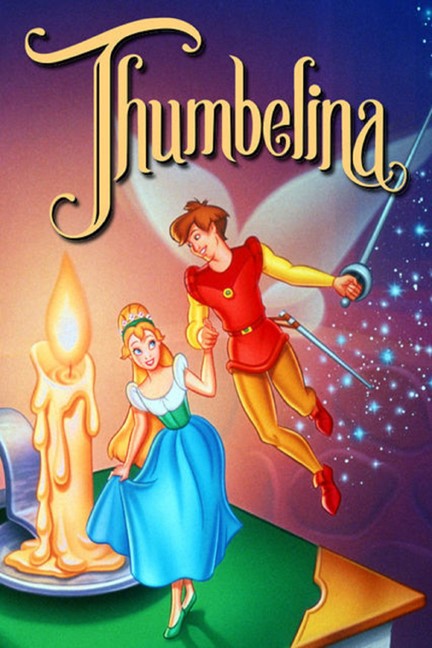
    Thumbelina is the story of a tiny girl no bigger than your thumb who is born from a flower and ends up becoming a fairy by gaining wings of her own. These stories of Thumbelina (sometimes known as Tommelise) hold the usual themes of marriage, wealth, and how a woman would need a man to support her. I personally chose Thumbelina because of the Don Bluth version. This version features features Jacquimo, a optimistically determined Swallow who helps Thumbelina despite the ridiculous odds. Don Bluth’s Thumbelina is a movie of my generation since it came out in 1994 and I was born 1993. However, the story of Thumbelina is much older than that. Thumbelina’s story originally appeared by Hans Christian Anderson, on December 16th, 1835, where her name was originally Tommelise which represents her Danish origins. The story was translated into Thumbelina for the English version which we read today (Nunnally and Wullschlager). Other cultures have taken on their own different versions of Thumbelina and even go as far as to change her name or even her gender. In another Danish version that is very similar to Anderson’s version her name is Ellie. Norway’s version, which is very different, has her only known as the doll in the grass. Italy did a gender swap and went down a very strange road with this idea of chickpeas where the main character was named Cecino. The first four Thumbelina stories appear in the Romantic Era including the origin story by Hans Christian Anderson. These four stories feature a struggle with depression followed by themes of the outdated ideal woman, pointless greed, and the enchanting powers of nature. In contrast, Don Bluth’s version, appearing in 1994, pushes against these original themes by making Thumbelina a stronger individual with an optimistic theme in the background.

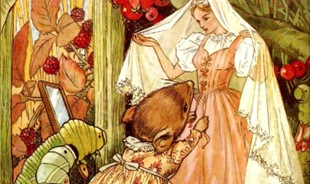
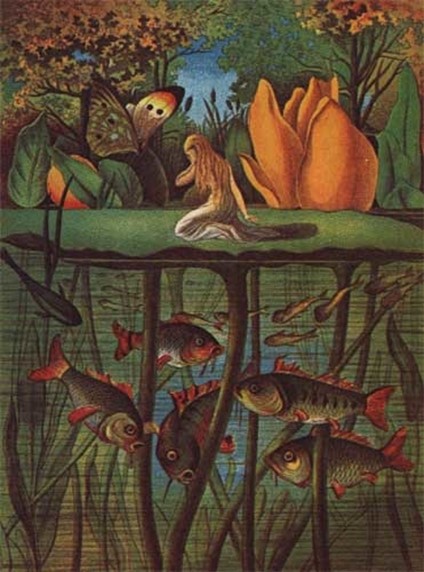
                The original Dutch story by Hans Christian Anderson was created in the year 1835 in which Thumbelina’s original name was Tommelise (Anderson, Hersholt, and The Many Names of Thumbelina) (Lamprecht 26). Tommelise is born from a magic barley grain and planted in a flowerpot that magically turns into a large red and yellow tulip. After being born as a little girl -who now sleeps in a walnut shell and plays in a ring of flowers – she gets stolen in the middle of the night by a toad who seeks to marry her off and keep her in a mud home. This spirals into her escaping with the help of others and leading her into more trouble. First with the May bug and then with a mole. Each time she goes against her nature (a whimsical free spirit) to be herself. Tommelise ends up almost being married to the mole (a grumpy shut-in with no love of the whimsical) thanks to Mrs. Fieldmouse. Thankfully, she Tommelise is saved by her sparrow friend who she had nursed back to health previously (after the second time he offers to take her away from the mole). The sparrow takes her away to the away to a forest far away where theres a marble palace with a bunch or flowers and nests. There she meets the king of the flower spirits who she marries happily living every after – the swallow secretly mourns with his broken heart- (he loved her too but loved her enough to let her go). Then he flies away to Denmark to share the story of Tommelise with a human who writes fairy tales in Denmark. (This is how we know the story today). All of the plot (or chaos) in Tommelise happens in the course of two years. Now one could take this story many ways such as the ideal woman, one who is willing to get married and cares about their looks – while entertaining guests and completing a series of domestic chores- The only free will Tommelise shows is that she can complain:

                Then they took the pretty little bed and swam away with it. Left all alone on the green         leaf, Thumbelina sat down and cried. She did not want to live in the slimy toad’s house,      and she didn’t want to have the toad’s horrible son for her husband. The little fishes who            swam in the water beneath her had seen the toad and heard what she had said” (Anderson       and Hersholt).

                 A natural child response when said child (Tommelise) are forced to do a something that they do not want to do. In the case of Tommelise (verses the toads), she complains out of frustration when feeling helpless in this predicament. Her consent does not seem to matter not until she meets the King of the flower spirits:

                The king was somewhat afraid of the swallow, which seemed a very giant of a bird to anyone as small as he. But when he saw Thumbelina he rejoiced, for she was the prettiest     little girl he had ever laid eyes on. So he took off his golden crown and put it on her head.       He asked if he might know her name, and he asked her to be his wife, which would make        her queen over all the flowers. Here indeed was a different sort of husband from the      toad’s son and the mole with his black velvet coat. So she said “Yes” to this charming        king (Anderson and Hersholt).

                Tommelise was given a choice to choose any flower and was asked to go with (not against) her nature for the first time.

                However, the focus should be on Anderson himself when it comes to the original story. The story came out on the anniversary of his mother’s death a year later which brings significance to Tommelise spending the whole winter underground (Nunnally X-XI). Winter takes on the form of death, despair, and depression (Anderson’s mom died in the wintery month of December). In Tommelise, all the things she loves begin to go away:

                Then came the winter, the long, cold winter. All the birds who had sung so sweetly for      her flew away. The trees and the flowers withered. The big burdock leaf under which she   had lived shriveled up until nothing was left of it but a dry, yellow stalk (Anderson and    Hersholt).

                Winter did not just take away her coping mechanisms, but it took away all the life that surrounded her -nature began to wither away-. This unpleasant experience resembles a form of depression, a dangerous deepening dark pit (a hole in the ground) that can lead to in a change in character. The mole in Tommelise literally lives in a hole and plays her polar opposite (He is all mister dark and gloom while she all sunshine and life):     

                Thumbelina did not like this suggestion. She would not even consider the neighbor,         because he was a mole. He paid them a visit in his black velvet coat. The field mouse          talked about how wealthy and wise he was, and how his home was more than twenty             times larger than hers. But for all of his knowledge he cared nothing at all for the sun and    the flowers. He had nothing good to say for them, and had never laid eyes on them          (Anderson and Hersholt).

                Not only was he the exact opposite of Tommelise and staying with him meant changing her character for good (restricting her personality to the point of not having one). He is the exact opposite of what she needs to be happy and thrive in this world. If Tommelise gives into the mole -in a sign of depression- then staying with him can be seen as a deadly trap where she would remain forever unhappy. Tommelise almost lets this happens to her, “The poor little girl felt very sad that she had to say good-by to the glorious sun, which the field mouse had at least let her look out at through the doorway” (Anderson and Hersholt). She almost gives up what she loves about the world. Her goodbyes are weighted in a depression that one cannot easily come back from (imagine giving up on the things that define you). Since Tommelise was experiencing the process of losing the sun, flowers, trees, and birds like her swallow a worsening depression began to happen inside of her because she experienced a whole year (not just the winter) underground. Anderson might have been experiencing a similar type of depression due to the loss of his mother. Mrs. Anderson died December 16th the year before Tommelise was published on the same date (Nunnally X-X1). Winter seemed to be just a bad time all around for Anderson, this kind of loss just does not go away.

                In contrast to the winter, the summer before she ends up with the field mouse and mole, she is completely fine surviving the summer:

                All summer long, poor Thumbelina lived all alone in the woods. She wove herself a          hammock of grass, and hung it under a big burdock leaf to keep off the rain. She took honey from the flowers for food, and drank the dew which she found on the leaves every     morning. In this way the summer and fall went by (Anderson and Hersholt).

                Tommelise acts as a self-sufficient woman and basks in the sun’s glory having escaped an arranged marriage and verbal abuse of the may bugs. She doesn’t return home and she does not try to find the lily pad to rescue the white butterfly (to be fair she had no idea where she was since the whole incident with the may bug). Instead Tommelise makes a temporary bed for herself to survive in because she doesn’t want to get herself more lost due to forced circumstances of her traveling (the kidnapping toad and the flirtatious may bug). Anderson was known to be traveling to Paris, Switzerland, and Italy before his mother’s passing. So, when Thumbelina comes upon the baren field of grain that may be near her home, the question becomes did Anderson return to an empty house instead of a mother’s love? (To which we can only contemplate). Tommelise’s rejection of the mole as well as toad, may bug and anything that did not fit into her world of beauty can also be seen as unfair expectations:

                She did not want to live in the slimy toad’s house, and she didn’t want to have the toad’s         horrible son for her husband…Thumbelina did not like this suggestion. She would not             even consider the neighbor, because he was a mole…But Thumbelina cried and declared          that she would not have the tedious mole for a husband (Anderson and Hersholt).

                Her expectation mostly had to do with the time period Anderson himself was living in. Around the 1800s the ideal woman around that time had to be proper, domestic and be content with in a marriage. Marriage usually represents some form of security as Mrs Fieldmouse points out: “If you could only get him for a husband you would be well taken care of, but he can’t see anything. You must tell him the very best stories you know” (Anderson and Hersholt). The attempt of making a home such as the mud home and a cozy hole in the ground (even a tiny walnut shell with flower petals to use as a bed) is seen as a negative. These homes are all meant to trap her in one place. The walnut allows Thumbelina to be trapped and stolen away from her home and mother. The mud room and the comfy hole in the ground were not seen as ideal but as imprisonment. Grief can imprison you and make you want to give up if you let it. However, with a little the help of others (such as the friendly fish and swallow) who are willing to listen you can make it to a better place. Whether it be an ideal home or not where you can start off new.

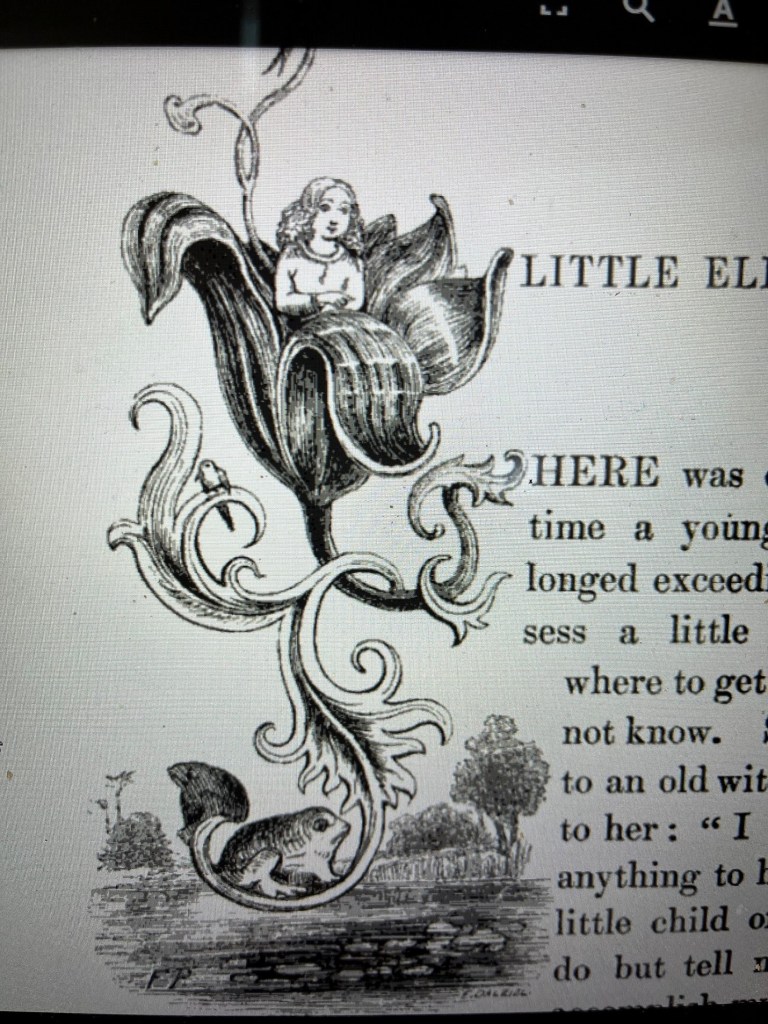
                In the origin story, there is little room to dig into other things such as symbolism and the ideal women further due to the focus on (why Anderson wrote story the way he did) the battle with depression. Thankfully, there is another Danish/Swedish version in 1846 that is very similar to his that keeps to the two-year timeline of Thumbelina which is called “Little Ellie” (Boner 153) (Lamprecht 27). Though the story runs along same plot line, there are a few slight changes such as her name is no longer Tommelise but a Swedish name known as Ellie. Ellie very much like was born from a red and yellow tulip from a barley corn and flowerpot. She went through the same trials with the toad, and this time it was not a may bug but a cockchafer (which I would take for a cockroach). She continues down the same story line of running into Mrs. Field Mouse and the mole to stay with for the winter. She finds the swallow and nurses him back to health. The story follows to the same ending as Andersons. There are of course a couple of differences that appear in this version of the story because it is retold eleven years later. However, before the changes let’s talk similarities. The red and yellow tulip that Tommelise and Ellie are born from symbolizes true love in the red petals or in this case leaves and hopeless love in the yellow leaves. Both stories had this symbolism which foreshadows Ellie’s trials that she will be facing soon enough (must proceed with caution). One can also imagine the tulip being the ‘he loves me, he loves me not’ flower if the leaves/petals are alternating around Ellie. If this is the case than did anyone truly love Ellie? (Did anyone truly love Tommelise?) We end with both answers as we get to see the king of the flower sylphs/spirits marrying her and the swallow loving her enough to let her go. (Hopeless fairy love and the true of a swallow). If you truly love someone, set them free. Other forms of symbolism come with Mrs. Field Mouse who seems a bit old fashioned by domesticating Ellie/Tommelise into doing chores around the hole:

                “If you care to, you may stay with me all winter, but you must keep my room tidy, and          tell me stories, for I am very fond of them’… “You must work on your trousseau this summer,” the field mouse said, for their neighbor, that loathsome mole in his black velvet       coat, had proposed to her. “You must have both woolens and linens, both bedding and         wardrobe, when you become the mole’s wife.’ Thumbelina had to turn the spindle, and        the field mouse hired four spiders to spin and weave for her day and night. The mole   came to call every evening, and his favorite remark was that the sun, which now baked the earth as hard as a rock, would not be nearly so hot when summer was over” “Perhaps        you would like to pass the winter in my house; but then you must keep my room clean,            and tell me fairy tales; for that is what I like more than anything’… ‘You can employ the     summer in getting your wedding-clothes ready, and what you will want in your             housekeeping,’ said the mouse; for her neighbor, the tiresome mole had really proposed         for Ellie. ‘I will give you all you want, so you may have a house full when you are a wife    of a mole’ So Ellie was Obliged to spin at the bobbins, and the field-mouse hired for spiders that were forced to weave day and night (Anderson, Hersholt, and Boner    161,167).

                Both stories have Mrs. Fieldmouse being very keen on the Thumbelina character to be forced into a domestication role. In the 1800s women were expected to act like in this way and if you didn’t settle down then there must have been something wrong with you. Addition to this sense of an ideal woman Ellie (Tommelise) seems powerless against male interference despite how she feels. She doesn’t fight against the toad. She doesn’t fight against the cockchafer (may bug). She doesn’t fight against the mole. Instead, she resigns herself to it because a proper lady does not reject the advances of a male suitor (Don Bluth and Lamprecht 37). Therefore, she could not do a thing to stop her troubles from happening and needed help to get out of them.

                A major similarity is the two-year journey where it starts spring/summerish and ends up going through two sets of seasons. Where she ends up migrating with the swallow to a place where sylphs or flower spirits live in their flowers (an eternal spring). Two years to unpack. The beginning of the story where Ellie/Tommelise are playing in a plate of water:

                by day she played on table. Here a plate full of water was placed, surrounded by the garland of flowers that dipped their stems in the water: in the middle, a larg tulip-leaf was swimming, and on this was Ellie to sit, and to sail from one side of the plate to the other;        and two white horse-hairs served as oars (Boner 155).

                The scene represents of form of stasis for no matter what she cannot float past the flower wreath that surrounds the plate. It isn’t until she is removed from her home that she really gets moving and becomes a traveler in a continuous motion. It didn’t matter that the toads tried to trap her into marriage or that the cockcharfer/may bug tried to take her for his own. She didn’t stay long enough. She ended up spending the summer alone taking care of herself all the way to beginning of winter. It is only when winter happens that she started to actually start running into trouble because she was trapped by natural forces. Thereby allowing for a form of courtship to happen from the mole such as the tunnel that she and Mrs. Fieldmouse were allowed to use after the mole fell in love with her voice. The biggest difference between these Tommelise and Little Ellie. Anderson’s tunnel, the mole makes the tunnel after meeting Tommelise to court her, but in Little Ellie he offers the tunnel up to them (it already exists). Underground with Mrs. Fieldmouse and the Mole that the Thumbelina character becomes restless missing the outside world as winter became spring. Her swallow friend said his goodbyes leaving her behind because she didn’t want to up and leave. However, she never left when it became spring (she didn’t even try to leave). Spring quickly became summer as she was on her way to marry the mole, which she was not happy about. By the time that autumn rolled in, she was not having it. Mrs. Fieldmouse scolded her for complaining and told her how lucky she was (more like cursed). Then four weeks later they were closer to Winter. She was saying her goodbyes to the outside world (giving into the curse). Luckily, her sparrow friend she had nursed back to health the previous winter was to the rescue and took her far away (breaking the curse of darkness). She finally settled down and got married to a sylph king. It took her two years to figure out what she wanted and settle down when it comes to marrying someone.

                The ending can be seen as a biblical or form of Greek symbolism as well. That is if Tommelise/Ellie froze to death before she got to Mrs. Field Mouse’s home. The hole in the ground homes transform into the underworld with the mole is the ruler whether he be Satin or Hades (Ness). In contrast to the underworld, we get the heavenly trees and marble palace with flowers that are home to angelic like creatures with wings (Anderson, Hersholt, and Boner 171-172). The representation of heaven and hell appears, but where does Greek part come in besides the mention of Hades that Ness had recently pointed out? According to myth Persephone being the goddess of spring was taken down into the underworld to be with Hades (away from the sun and everything she loves like the sunshine). Sound familiar, it should because that is what happens to Thumbelina. Yet, that is if the case with Thumbelina and she goes to the underworld after dying from a “freeze to death” situation as Anderson suggests in his original version.    Another theory involves a different kind of cycle other than life and death. She was born from a flower and therefore ends back in the flower. However, the ending is not the only time she ends up a flower. The maybug/cockchafer puts her on a white daisy, which signifies the end of her first two trials. Any coming-of-age trials usually come in sets of three. In the case of Tommelise/Ellie had only experienced the first two (they were very short trials). Therefore, it left no room for Thumbelina to really thing about what she really wants out of life (the story would be too short otherwise). If the story would have ended there, then Tommelise/Ellie wouldn’t know her place among the fairy like creatures in the end.

                It is within these three trials we begin to see differences like escaping the toads, the sash becomes a “girdle” (Anderson, Hersholt, and Boner 158). The may bug becomes the cockchafer, and the words they say alter somewhat but convey the same message. A clear contrast is with Mrs. Field Mouse who says “Fiddlesticks” in Anderson’s English translation and “Fiddle de dee” in this version with Ellie (Anderson, Hersholt, and Boner 168). However, because time is not spent long enough with the first two trials the changes were more subtle compared to the change with the tunnel in the winter scene. The timing of how she figures out that the swallow isn’t dead changes:

                 But Ellie could not sleep. She got up, platted a mat of hay, carried it to where the dead           bird was, and covered him up on every side, that he might rest more warmly than on the     cold earth…Then she laid her little head on the bosom of the bird, but she was sadly           frightened; for it seemed to her as if something moved within (Boner 164).

                Tommelise figures this out a lot sooner than Ellie where the mole also had dug the tunnel to court her; she figures out that the swallow his alive by hearing a soft heartbeat to return that night. Ellie on the other hand was given the tunnel that was already made. When she returns to the dead swallow that night, she warms his body up (a funeral sendoff ritual). That being said there really isn’t much difference after that because a flower sylph and a spirit of the flower are still considered to some form of fairy creature. The same can be said for the may bug and cockchafer are a form of some flying bug that is meant to gross the audience out. Though the swallow’s false death is meant to be playful (yay, the bird is not really dead!) and the stories end with a happy note.

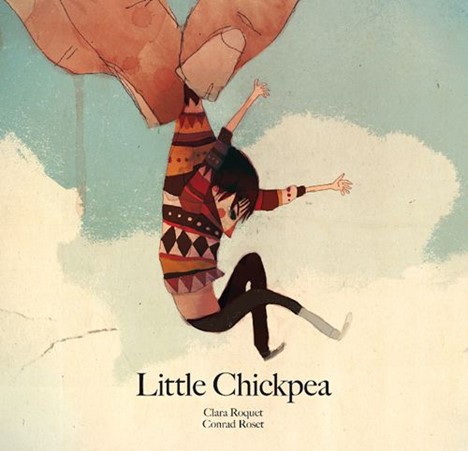
                Italy’s story does not end with a happy note. It is also very much different from the main Thumbelina story but sticks to the Thumbling lore of a typical male role. The story is called “Little Chick-pea” and appears in the year 1885 (Sur La Lune)(Lamprecht 28). It follows a boy born out of chick-pea that his mother traded in exchange for two loafs of bread, so a woman could feed her family. His mother got a bag of chickpeas to plant in the ground and next morning she had hundreds of sons (too many sons). They were instantly killed by the woman’s husband, a carpenter who was verbally abusive with her about having kids to begin with. That’s how this whole mess started. Cecino being the lone survivor went to help his dad at his shop. His father then took him around the village while being inside his pocket. Though his dad was perceived to be crazy for it appeared that he was talking to himself, but when he proves that he wasn’t (mad as a hatter) Cecino quickly became hot in demand.

                His father rejected the offer the first time. After the two thieves try to steal the ox, Cecino warns his dad, and this follows to the thieves wanting to buy him. His father caves after some persuasion for two bags of gold. Then shortly after they steal two horses and have Cecino go feed them oats, but he falls asleep to be eaten by a horse. The thieves come looking for him and he tricks them into killing the horses. The two thieves ditch the horses near a famished wolf. The wolf eats the horses and Cecino before wanting some goat meat as well. Cecino warns the goats, and the wolf thinks that he ate some wind and bashes against a rock. This frees Cecino who quickly hides under some rocks. Then three robbers appear with the leader needing to count some gold in a bag. Cecino tricks the leader to killing his two friends and then spooks him into fleeing leaving the bag of gold behind. Cecino retrieves the bag of gold and heads home. However, Cecino does not make it all the way, for his mother goes out to meet him after hearing him. She takes the bag of gold returning home without Cecino. She returns for him, but he is not there and so she with her husband goes looking for him to find him drowned in the puddle. (There is plenty of death in this story).

                The cycle of life of death appears strongly in the Italian version.  The focus is turned towards the aspects of what comes from the earth returns to the earth, in addition to the violent food chain of animals eating each other. Yet this story is also powered by greed with a heavy sense of materialism being the driving force of this story. Why plant all of the chickpeas? Why are there so many deaths? Why put a price on someone’s life? All of this can relate back to the sin of greed and how greed has consequences. In the Anderson story and the Ellie version, Thumbelina’s barley corn was traded for “12 pennies” and “some silver”.  In the Italian story we get “two loafs of bread” for a whole bag of chickpeas and then Cecino gets sold for “two bags of gold” which leads to another bag of gold that was chosen over him -results in Cecino drowning in a puddle (Anderson, Hersholt, Boner 154, and Sur La Lune). The total value of Cecino’s life is two loafs of bread and three bags of gold plus one hundred and four lives. Which compliments the theme of him being more of an object than any other of the Thumbelina previously mentioned. Cecino existed as an object. His birth was traded for two loafs of bread. His life was traded for all of his sibling’s death while he hid. His father’s clients wanted to buy him. Two thieves bought him for two bags of gold. His freedom cost two lives of horses and his love cost him two more deaths and another bag of gold. The cycle of Cecino life ends when his mother took the bag of gold home and not him:

                “When his mother heard him, she went to meet him and took the money and said: “Take      care you don’t drown yourself in these puddles of rain-water.” The mother went home,     and turned back to look for Cecino, but he was not to be seen. She told her husband what      Cecino had done, and they went and searched everywhere for him, and at last found him     drowned in a puddle” (Sur La Lune).

                The idea of him being an object born out of greed and his survival is determined by other actions shows that he cannot live independently, for his usefulness had only benefited others than himself. Thumbelina also was beneficial to others but not herself. In the Italian version the mother is bitter because her husband is verbally abusive to her about not being able to have kids, “he did nothing but scold his wife because she had no children” (Sur La Lune). In a form of bitterness and retaliation towards her husband she strikes a deal with a begging woman who offers her way to have his for two loafs of bread. She then plants all of the chickpeas the poor women given her just to shut him up so she would have some peace of mind (this was a poor decision on her part). It drove him crazy enough to kill everyone, but Cecino who hid from his father. Then his so-called mother sent him to go help his dad in his shop, which after what just happened would be highly questionable (but okay let’s send him off to the man that killed his siblings). His father known killer of his siblings eventually trades him away to be with two thieves that have him be like their little mascot (Cecino officially loses his son status). He ends up doing the chores for the thieves too when they claim to be too tired to accomplish the tasks. This also relates to Mrs. Fieldmouse and Tommelise’s deal for her to during the winter for cleaning and entertainment. The materialism is weighed more heavily in the “The Little Chickpea” due to the number of deaths that has happened over what appears to be two days of time.  

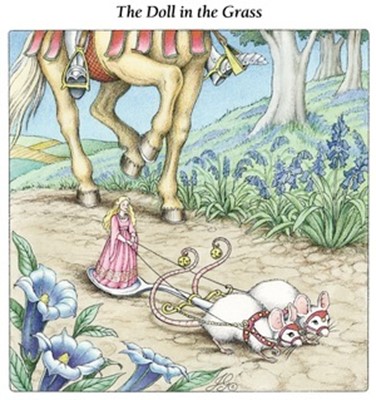
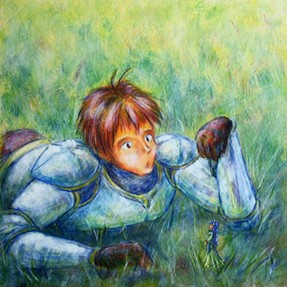
                Materialism and greed do not stop with Little Chickpea, but it continues in the Norway’s story “The Doll in the Grass” that was also created in the romantic era of the 1800s (Gosagacious and Hughes) (Lamprecht 29). The title hints to the materialism that is being placed on the Thumbelina character that lives in nature by associating her with a doll. The fairy tale begins with royalty with a king and his twelve sons. Once the twelve sons were of age, the king sets his sons on a task to bring back a potential wife. However, to get the King’s approval the potential wife must weave a shirt in a day. Of course, he would set his sons up with new gear and horses for this quest to be ‘the knight in shining armor’. Not all of sons got along. The youngest son called Askeladden (sometimes known as Boots) was immediately rejected by his older brothers after departing the kingdom. Askeladden was left to despair without going very far as his brother went on ahead without him. When the doll in the grass appeared before him. (Though this part is a bit confusing). She could be seen at tiny human who initially greets him or as another tiny human entirely that he meets after bending down to get a good look at her. The doll herself was very beautiful and listened to his woes before agreeing to marry him. The doll in the grass quickly whipped him up a tiny shirt that he would bring to his father. Surprisingly his father approved of the tiny shirt. In relief he went to find his soon to be doll wife. He finds her, but she is to be considered an independent tiny doll queen who rides on a silver spoon being pulled by two white mice. She stays like this until Askeladden’s horse gets spooked. The doll queen’s spoon flips and launches her into the water. A merman carries out and she is fully grown into a beautiful woman. Then she rides on his horse back to the castle with him to where they are married and live happily after. His brothers and their ugly wives on the other hand were rejected and forced out due to their jealousy of how beautiful the doll in the grass was.

                Materialism and the ideal woman do go hand in hand in the doll in the grass story, but the enchantment of nature becomes more of a president theme in this story. The doll in the grass lived in nature living amongst the grass (where tiny humans live). There were even mice who pulled silver spoons that she rode on. Not to mention another mythological being, a merman, who was not too far off in the waters and was able to rescue her when she fell in. However, it is this fall that causes the doll in the grass to lose her independence as she becomes too big to ride her silver spoon being pulled by two white mice:

                 upsetting the spoon so that the Doll in the Grass fell into the water. Askeladden was so     upset that he did not know how he would bring her up again. But after some time a merman came up with her; and now she had grown as big as any other adult human, and    much lovelier than she was before (Gosagacious and Hughes).

                The water caused her to grow into normal size due to the enchantments of nature being removed. She joins Askeladden on his horse and they ride to the castle. This illustrates her loss of power when it comes to strength and pride. One could also see the water as a form of baptism that converts her over to the human world.  Since the water officially removes her from the natural world. She still has to marry Askeladden despite this (unfortunate) change that has come over her. She was removed from the nature and so the nature was removed from her. In the Romantic Era, imagination and connections to nature were heavenly influenced in fairy tales. For instance, the doll had been in the grass and submerged in water. She becomes connected to the nature in the setting of this story. Additionally, the doll is a well-grounded individual until unforeseen circumstances removed her from the earth. Once submerged in the water -the earth can be considered washed away from her- the doll becomes cleansed. The separation of nature disenchants the doll into a proper wife (the ideal woman). The proper wife has to care what they look like – how they act – and be skilled at doing domestic tasks such as weaving a shirt in a day (old fashion trademarks of women behavior). It objectifies women by putting the doll or any Thumbelina character among everyday objects. For example, Tommelise and Ellie’s play time was on a plate. Cecino though male was sold like an object. The doll in the grass rides on a “silver spoon” (Gosagacious and Hughes). Additionally, this was the time period where the everyday women were meant to act like the ideal woman and find husbands to live a proper life. And if someone wanted their hand in marriage, they had to accept the proposal to keep face. Nature pushes against this idea of the ideal woman because the doll in the grass exists in the outside world. In the outside world, nature is naturally beautiful unique and an unpredictable force. Nature in the sense of “The Doll in the Grass” story proves to be a symbol of freedom as the doll is leaving the outside world when she gets tossed into the water – losing her freedom – due to unknown mysterious circumstances that spooks Askeladden’s horse.

                Another look at the nature lens is that the doll along with the other Thumbelina characters are given domestic tasks. These domestic tasks are supposed to be natural for women as an everyday skill. Women are assumed to know how dress themselves, clean, entertain, and make clothes. In the original story Tommelise and in the other Danish version, Tommelise is forced to spend her spring and summer -making her wedding clothes- before she is to be married to the mole. The doll in the grass has to weave a shirt in the day. In Tommelise and Little Ellie having children was stressed as a theme. First Tommelise and Ellie begin having trouble by being arranged to be married by -going into a mud home- with a toad and -into a hole- with the mole alone. (Vaguely described as private chambers). This is to be assumed that they are going to consummate the marriage through a form mating. However, if we look at the Thumbelina mother and add the Little Chickpea’s mother into the mix then we get women who are not complete without children in their lives to the point of verbal abuse from the husband. Which could probably explain why in the first two stories with Tommelise and Ellie, there was no father figure. In contrast to these stories the doll in the grass does not have a mother. She does get married like Thumbelina into royalty. Marriage among royals usually is means to do one of two things. The first is to unite a kingdom and the second is to conceive an heir. Which one can see by the King’s condition for his sons to marry. The condition involves an impossible task of finding a good wife to weave a shirt in a day. Now why would a wife need to weave a shirt in a day and why was the tiny shirt acceptable? The answer is clothes for their future children that will grow be constantly growing out of their clothes. The tiny shirt becomes a symbol of baby clothes.

                Impossible tasks such as weaving a tiny shirt inspires a fifth media to be discussed which brings us out of the 1800s and into the year 1994. Don Bluth’s movie “Thumbelina” is filled with music and similar plot line to Tommelise and Little Ellie, but there are some huge differences along with additional challenges that combine the old with the new (Lamprecht 30). The story starts out with the song “Impossible things” sung by the swallow Jacquimo, who is hopeless romantic and very optimistic bird with -a collection of romance novels- in the ceiling somewhere in Paris. He is the storyteller of Thumbelina. The audience gets shown the first few pages with the barley corn and flowerpot that turns into a red flower (what I assume to be the tulip) where Thumbelina is born (Don Bluth and Lamprecht 31). She does not play in plate of flowers and water. Instead, she helps with chores and ends up in some sticky situations due to her size. Thumbelina’s struggles are reflected when her mother is reading her a bedtime story about the noble dog -she gets flustered and asks- are there any stories about little people. Her mother shows her pictures of fairies, where she has now become enchanted by the ideas of royalty and wings (Don Bluth and Lamprecht 31). Then that night she meets Prince Cornelius who hears her singing. He takes her out on a date. Once the date is over, he promises to come back for her in the morning, so she can meet his parents and propose to her. However, the toads had her singing while she was on the date and the momma toad kidnaps her in the middle of the night. Where she is forced to sing and be engaged to the Grundel who is not the sharpest tool in the shed (Lamprecht 32). This her engagement happens after being told by the momma toad, that she should focus on earing a living through her voice to avoid ending up domestic situation. Thumbelina voices against the toads and fights them every step of the way and asks, “Is there anyone who cares what I think?” and Jacquimo appears before the two fish and helps her with the lily-pad, but she is soon thrown into another troubling situation. She approaches (her version of) a waterfall. Then the fish appear along with the jitterbugs to help her to the shore. Where she plans on going home and Jacquimo helps by singing an optimistic song about impossible things when you follow your heart. She tries to find her way home along with the company of some jitterbugs. Until the beetle shows up scaring the jitterbugs off and becomes very invasive with her.

                Thumbelina asks him for a favor to fly her up to the tree so she could have a better look to find her way home. However, he changes the plan ever so slightly by taking her to beetle ball. He dresses her up like a beetle, where she is praised until her costume falls apart. This causes verbal abuse to happen as everyone starts to call her ugly including the beetle who had once called her beautiful (he was peer pressured). Ashamed and depressed, Thumbelina weeps and Jacquimo finds her and begins cheering her up. He promises her that he will find the prince for her so she can have her happily ever after. However, Thumbelina gets lost. Winter comes faster (since this is a movie) and she ends up underground with Mrs. Fieldmouse after waking up in her home. Mrs. Fieldmouse just happened to find her in an old shoe nearby. Soon after she wakes up and hears news about the prince’s death. Mrs. Fieldmouse -insensitively- introduces her to the mole and has her sing a happy sad story for him. She sings about the sun and winter showing her depression from the news of she the prince found dead and frozen solid. In return for the song, the mole shows them a unique find in one of his tunnels. Which is an injured and dead Jacquimo. Thumbelina in shock weeps for her dead friend. She soon realizes he is not dead and plots to nurses him back to health. While Mrs. Fieldmouse and the mole conspire to get her to marry him so she can keep him company in his hole. Thumbelina rejects the idea after learning what the Mrs. Fieldmouse and the mole have planned for her. Mrs. Fieldmouse tells her to do it for security (money). By marrying the mole meant she would be provided for with money and riches. Which she then tells a recovering Jacquimo, who tells her that’s silly and she should marry the prince. (But he doesn’t know that prince is assumed to be dead). He asks her to come with him, but she is feeling helpless and decides to go along with marrying the mole. However, at the wedding ceremony she rejects the mole because she still loves Cornelius (and she doesn’t love the mole). The toad appears along with the beetle. She tells the toad off and stomps on the beetle’s foot rejecting both of them. Then she escapes while chaos is happening behind her. Thumbelina sees the light coming out of a tunnel and she escapes finding Jacquimo whose is singing happily. He takes her to the vale of the fairies and encourages her to sing. She sings and the ice starts to melt despite her doubts -she contemplates out loud almost giving up-, but Cornelius shows up. He proposes. They kiss, which gives her wings (Don Bluth and Lamprecht 37). Then she gets married with her mother being able to attend the wedding and she lives happily ever after. Then we are back in Jacquimo’s attic as the tiny book closes.

                Now Don Bluth’s movie pushes against Anderson’s version of Thumbelina because Thumbelina has a voice of her own. Thumbelina is curious about the world, love, and is set on marrying for love (even though she doesn’t know what love is at first). She is shown by the prince what love at least looks like. Her sings offering to be her wings with hints of hope that she may have her own one day (Don Bluth and Lamprecht 32). Thumbelina also voices to against the idea of arranging marriage to the toad publicly and wants people to care about what she thinks. She uses the beetle’s infatuation for her to her advantage, but it backfires because she doesn’t have wings (Don Bluth and Lamprecht 34). She leaves the mole at the alter rejecting him saying never. This empowers her. She rejects both the toad telling him no and telling the Beetle that she is not his to claim -on her way out- (Don Bluth and Lamprecht 36). She even argues with Jacquimo because his optimism can be seen a form of torture. This would not slide in the 1800s. However, since the movie was made after the 1970s, this empowerment for Thumbelina became acceptable. The 1970s were the start of fairy tales becoming more and more liberating for women over time, which is what led the world to the Don Bluth movie (Haase). In addition to this freedom that women were getting in their starring roles, Thumbelina could have easily flown back home on Jacquimo’s back and not go on this crazy adventure. However, if she did go home then the most important messages would be lost in this version of Thumbelina. These messages encourage people to try and not give up. Jacquimo does not provide her with a quick fix. Instead, he encourages her that she can find her way home on her own (Don Bluth and Lamprecht 33).

                Though when does anything go according to plan. Thumbelina (of course) runs into plenty of troubles. So does Jacquimo. In his search for the vale of the fairies and his optimism being his driving force to help her out he flies finding predators -to ask if they know anything- including a fox and a hibernating bear. He even gets caught in the winter winds causing him to crash into a thorn bush -getting a thorn stuck in his wing- which impairs his flying ability. This event eventually causes him to end up in the moles hole (Don Bluth). However, even though nothing goes according to plan he believes anything is possible if you keep trying. His belief enforces the original message of Thumbelina trying to find her way home. Additional differences are with Grundel and the Beetle who go after her after Thumbelina leaves them making her an object of desire to be chased after, but they were more for comic relief like Horris and Jasper in 101 Dalmatians (just two goons that one would find appalling). Thumbelina still gets married to a guy she just met. Her love to be considered as true love since the tulip was only red petals (Don Bluth and Lamprecht 31). She chose Cornelius compared to Tommelise and Ellie who was just kind of made queen and proposed to with a crown. Not to mention Thumbelina got to keep her name. Tommelise and Ellie got their names were changed because their names were found to be ugly. Cornelius loved everything about Thumbelina including her name.

                Lastly, Thumbelina was nowhere near being the domestic type. Thumbelina struggled with domestic tasks like getting trapped in a pie, helping with the chores, and doing as she is told. She doesn’t just accept her circumstances. She does not go for help. In the case of the toads, she is told about the domestics of women hood by momma toad:

                The scrubbings and the washings
                And the noses with the drippings
                And the soapas always boiling…
                Mozo, Gringo, Grundel Si, Si
                The panes and windows falling
                With the diaper changing
                With the roof she’s leaking
                And the enchiladas spoiling…
                Do you know how to do these things
                Like you will have to do these things
                Or does the very thought of it make you wince (Don Bluth)

     Thumbelina winces to this, but she still wants to marry the prince and not Grundel (Don Bluth and Lamprecht 32). Additionally, she is considered to be stuck one place and help finds her and she says the first thing she needs to do is to get off the lily pad (not go for a wild ride on said lily pad) (Don Bluth and Lamprecht 33). Then when it becomes winter, help finds her again and brings her in. She takes refuge in an old shoe, near the home of Mrs. Fieldmouse who brings her in while she sleeps (deadly sleep?). In addition to this Thumbelina never asks Jacquimo to fly her home. Not until the very end where he takes her to the vale of fairies. Thumbelina also doesn’t want to entertain people, she is forced to sing and perform before the toad, beetle, and mole despite her objections. Her thoughts along with her feelings are not taken into consideration at all. This happens especially when it comes to her being underground with the mole. The mole appears in three of the five stories we have discussed and can represent as death. He even decorates his home with dead bugs (or as the Beetle puts it he stuffs them and pins them on his wall) (Don Bluth and Lamprecht 35). That would mean that Thumbelina either has died or is in the process of dying. In another sense of this scene – she defies death. Another empowerment for women, they can defy death (do not give up on life).

                Another game changer is that Don Bluth’s movie is the only story that Thumbelina expresses interest in love and being the only one her size. It is also the only story that hints to her age of being a teenager when she is born based on Cornelius’ age of sixteen-years-old revealed by his father when talking to his mother -during the goldening of the leaves-. Cornelius also is not the standard love trope guy, who acts like a gentleman or the knight in shining armor. Compared to the other stories of being a person of high prestige and loves her only for her beauty. He is an adventurous teenage boy, who flies around on his bumble Buzzbee and does indeed go to save her, but he is has his flaws (Don Bluth and Lamprecht 32). Cornelius is clumsy, vulnerable to the winter, and is stopped by freezing in a puddle. While Thumbelina gets herself into more trouble. He does get her in the end, but he does not save her. Cornelis just gets to appear as another playful joke about defying death (men can defy too).

                The Thumbelina story explores the themes of depression, death, love, marriage, ideal women, nature, materialism, ideal men, and the changing of seasons. Though most of these stories happened in the 1800s and only one in the 1900s – these stories still have evolved over time and still hold significance value today – when it comes to the female perspective about love. Love takes on so many forms and has evolved over time just as the story of Thumbelina have done. How would the Thumbelina story be written today in the year 2022? Love takes place in many peoples’ hearts both in the romantic and nonromantic sense as we have seen in other fairy tales that are just starting to come out; or have come out in the past that have just been overlooked. One of my favorites that fits into the theme of Thumbelina is the movie Epic that is about this connection of nature, love, reconnecting with family and oneself to nature. Epic is a seriously underrated movie despite how good it was. It showed how love knows no bounds. Its one of the few movies where an African American woman plays queen of the forest and is in love with a white leaf-man, who anything would do to keep her safe. She has this beautiful powerful role that is all about love and connection to the earth. The theme of love is one that transcends time and is one that constantly evolves with each new experience. We keep falling in love with things – we personally find beautiful. Love is a natural thing to want, and it is one thing we cannot live without. But with love there comes hate and fear. Hate because we run into things that go against our personal nature. In Thumbelina this happens with the Mole, he is not what she loves and plays the opposite to what she needs to thrive (Don Bluth and Lamprecht 35). What she loves is what she needs is love and love is what allows us to thrive. We all faced fear when it comes to love. We begin to feel self-doubts and question our judgements on the person we picked. However, we evolve with love too. Jacquimo’s song says, “You’re sure to do impossible things If you follow your heart Your dreams will fly on magical wings” (Don Bluth). Our heart in a metaphysical sense is one of most powerful gifts of intuition. It is our hearts that guides us. They tell us when something is real compared to what isn’t. That is why the hope of true love exists. That is why we know it exists. And it is why we get scared. And why we know, what we do not like. Today’s Thumbelina should reflect on our version of love today. Whether it be love to nature or love we share with one another. Love has and will continue to evolve, which is why you should “Just trust the swallow And always follow your heart” (Don Bluth).

    Pictures

    Works Cited

    “A Danish Story-Book … Translated by Charles Boner. With Numerous Illustrations by the Count Pocci – Google Play.” Google Play, play.google.com/books/reader?id=IgVmAAAAcAAJ&pg=GBS.PP164&hl=en. Accessed 25 Feb. 2022.

    Don Bluth. “Thumbelina Full Movie 1994 HD.” YouTube, uploaded by Watch Movies, 29 Dec. 2017, http://www.youtube.com/watch?v=J10SnPvktKc.

    Gosagacious. “Doll in the Grass: Analysis.” Awesome Things, 8 Dec. 2015, gosagacious.tumblr.com/post/134798603954/doll-in-the-grass-analysis.

    Hallett, Martin, and Barbara Karasek. “Feminist Fairy-Tale Scholarship.” Folk and Fairy Tales – Fifth Edition, edited by Donald Haase, 5th ed., Canada, Broadview Press, 2018, pp. 394–400.

    “Hans Christian Andersen : Thumbelina.” Copyright 2022 The Hans Christian Andersen Center, andersen.sdu.dk/vaerk/hersholt/Thumbelina_e.html. Accessed 25 Feb. 2022.

    Hughes, Simon Roy. “The Doll in the Grass.” Norwegian Folktales, 25 Feb. 2022, norwegianfolktales.blogspot.com/2016/09/the-doll-in-grass.html.

    “The Many Names of Thumbelina.” Writing in Margins, writinginmargins.weebly.com/home/the-many-names-of-thumbelina. Accessed 25 Feb. 2022.

    Ness, Mari. “A Tale of Tiny Artistry: Thumbelina.” Tor.Com, 17 Jan. 2018, http://www.tor.com/2018/01/18/a-tale-of-tiny-artistry-thumbelina.

    Nunnally, Tiina. “Chronology and Introcuction.” Hans Christian Anderson Fairy Tales, edited by Jackie Wullschlager, Deluxe, New York, The Penguin Group, 2004, p. X–XXXIII.

    “Sur La Lune || Thumbelina Annotated Tale.” Sur La Lune, http://www.surlalunefairytales.com/s-z/thumbelina/stories/littlechickpea.html. Accessed 25 Feb. 2022.

    “Thumbelina: The Influence of Literary Movements, by Sydney Austin.” Ole Miss Fairy Tales 2015, olemissfairytales2015.weebly.com/thumbelina-the-influence-of-literary-movements-by-sydney-austin.html. Accessed 25 Feb. 2022.

  • Daytime Owl Stories and Unforgettable Oaths Among the Rocks and Trees

    January 22nd, 2023

    Owls have been a part of folklore since ancient times, and modern storytellers often use owl superstitions and symbolism to amplify their themes. In most cultures. owls are referred to as symbols of wisdom, omens of death, and even bringers of prophecy. The Greeks according to Homer’s mythology have the Greek goddess of wisdom Athena claim an owl as her mascot when looking for a new companion, for she was impressed with its wisdom and levels of seriousness (The Magic and Mystery of Owls). Native Americans have a different folklore where owls are associated with prophecy and divination (The Magic and Mystery of Owls). Indeed, the Hopi tribe gave special significance to the Burrowing Owl as a sacred creature that symbolized their god of death and was a guardian of the underworld. Another owl that appears in folklore is the Snowy Owl that appears in Alaska told by the Inuit people. The Inuit people tell the story of a Snowy Owl and a Raven making each other dresses, but the Raven would not sit still for their fitting and the Snowy Owl lost their cool -throwing a pot of lamp oil at the Raven- thus the Raven’s dress turned an oily black and remained forever more (The Magic and Mystery of Owls). Owls also appear often in superstitions as an omen of death. In most African countries owls appear to be connected to sorcery and baneful magic, while they can also signify that if a large owl appears out of a house, then a very powerful shaman lives there. Shamans also hold the belief that owls can connect them to the spirit world by being messengers (The Magic and Mystery of Owls). Owl superstitions even appeared in Ancient Rome and Great Britain, nailing an owl to your door was meant to protect you from evil. Owls were seen as harbingers of death and were even said to have foretold Julius Caesar’s death (The Magic and Mystery of Owls). In Kathryn Lasky’s story, Legend of the Guardians: The Guardians of Ga’hoole, ancient owl folklore becomes key in the oral tradition of storytelling and in the daily ritual of seeking meaningful answers.

                Lasky’s book series about Legend of the Guardians: The Owls of Ga’hoole, became a film directed by Zach Snider and screenplay written by John Orloff in 2010, incorporating owl mythology stems from the idea of tradition being a way to understand the past in order to create meaning for the present through the art of storytelling. The audience is first introduced to a tyto (barn owl) family of five with a snake as their nurse maid. Soren (the protagonist) and his little sister have been playing pretend as they reenact their favorite battle story that was passed down to them from their father (Noctus). Lasky uses the superstition of owls being messengers by incorporating wisdom into the main protagonist’s father Noctus who acts out his parental role by telling his sons a story. The classic hero versus villain tale stems from a significant moment in history (Battle of the Ice Claws) that is supposed to bring hope and good dreams as a daytime (bedtime) story before they go to sleep. Bedtime stories such as these often represent historical lessons -to reflect on, and inspire them to adapt to an unknown future (Sims and Martine 69-74). However, like all daytime stories there is an ominous warning that comes at the end and is treated as a second thought, the villain they call Metal Beak may still be around plotting his revenge. Soren has faith in the Guardians, but his older brother tells him that they are just stories and should not be taken so seriously. Their father reminds them that stories are part of their history and culture that they can always learn from, even after the 700th time. It is in this moment that he tells them that not seeing something doesn’t make it any less true, like their instincts to fly to which he refers to as their gizzards. Traditional stories such as the ones about the guardians are not just about the lore, but the interpretation that can define one’s life and even unite or break a community (Sims and Martine 70).

    The storytelling tradition seeks to create and find meaning in various aspects of life. (Why can’t we talk things out?). Kludd the elder brother seems to lack this traditional meaning, while Soren is headfirst invested in these traditions hoping to find his place among them one day. Traditional stories such as the Battle of the Ice Claws are usually told once a child reaches the proper age, in order to prepare the child for what happens after they leave home (Sims and Martine 71). In addition to Soren and Kludd’s differences Soren succeeds in his first coming-of-age tradition of branching with their father. Kludd does not. Soren who fully believes in the guardians even without seeing them has a strong gizzard (a form of ancestral guidance) shows no form of struggling. In this moment, Kludd starts to become the anti-protagonist because everyone has the need to join a group or community, and Kludd starts to feel isolated from his own family (Sims and Martine 71). Unfortunately, Kludd (who doesn’t believe in anything that he can’t see) struggles to get to his next branch. This difference separates Soren from his brother throughout the movie as the stories take him all the way to the great tree, where he sees the guardian at last. Lasky has Soren traveling as the messenger to warn the guardians up to this point, thus incorporating the messenger superstition into Soren. However, Soren also demonstrates the symbol of wisdom after delivering his initial message. He then demonstrates what the importance of stories held for him as he speaks in the room when -other owls were doubting his truth- about the pure ones raising an army by kidnapping owls from their hollows. Usually, not many would like to admit or even believe that a child sees or knows more than the adults do. Yet, this is the case for Soren as his personal truth is what unites the Guardians to act (Sims and Martine 70). Soren tells the guardians that he had no inkling that they were true or not when he came looking for them. All he had to hold on to were the stories that passed down to him. This sparks Ezylryb to speak up and defend Soren even though he does not wish for another war, but if what Soren and his crew say is true than they should at least do him the honor of checking out. This sparks the guardians into action to send scouts to validate Soren’s words.

                Lasky also jumps into action by using other owl myths combined with a traditional community through a medieval training montage. Soren and his friends are introduced to the guardian’s culture and tradition as they would begin their training to become guardians themselves. Each guardian has their own chaw (role) to play among the Guardians such as navigation and record keeping. Lasky uses the Guardians’ chaws to illustrate a medieval style of community that reflects the mythology of owls being the protectors from evil. Soren’s party of friends go through each lesson to find where their strengths are. Everyone has a part to play in the community, a meaningful role that suits them the best and through training with various tasks one can interpret and even create a newfound sense of identity (Sims and Martine 70). In addition to Lasky’s medieval theme, she has Soren find himself the historical chronicles so he can realize that the stories he grew up to love were nothing like what really happened. What Soren was reading, had been the truth of battle. No glory. No fame. Just war and death. Lasky then reveals the truth about Ezylryb as Lyze of Keil, Soren’s hero (the leader of the guardians that once struck down Metal Beak), who is considered to be a crazy old war veteran who is one of the scribes for the chronicles. Old Ezylryb is not only a scribe, but a master storyteller for all stories have a place of origins and the legend of the guardians could have come from Ezylryb himself (Sims and Martine 75). Lasky gives her audience another piece of wisdom through Ezylryb, when he tells Soren there is no glory in battle and being a guardian, it’s all about doing the right thing over and over again to protect the peace. Sometimes doing the right thing can feel futile and even frustrating because it requires a connection that is not always received (Sims and Martine 70). Soren takes his hero’s words to heart (making the connection) as he is left to attend his little sister, who was recently rescued from the scouting mission. He learns through his little sister that Kludd was the one who harmed her and helped set the trap for the Guardians.

    In addition to Lasky’s methods of using tradition in the case of storytelling, she also uses tradition to show how it can divide people from each other. The initial tear starts with Soren as he is with his little sister, who tells him that their brother was behind her moon-blinking and faked rescue. In realization that his brother was involved with the trap and Metal Beak having an inside man, Soren and the others fly to acting knowing that the guardians are in trouble. Before Lasky’s next tear, Soren takes all his teachings from his father, his teachers, and his hero into account as he -flies into fire igniting a teapot on fire- to strike the contraption with the metal flecks. Within this particular scene, Soren has his eyes closed, trusting his instincts (ancestral guidance) to guide him where there is no path (Sims and Martine 74). He succeeds, but now he must face Kludd. Lasky’s second tare happens when Soren and Kludd have words, but they are past words at this point. Kludd already made up his mind and had been conditioned to the point of accepting that this is him (the brother Soren knew was too far gone for words to matter). Sometimes words don’t even have a chance to be received, for not everyone wants to listen or be -saved- like Kludd. In the final tear of separation that would separate Soren from his brother, Lasky gives Soren false hope as he kept trying to help Kludd. Kludd’s obvious rejections and cruel manipulations became the final tare as he played to Soren’s sympathy so he could save himself and pull Soren into the fire. Kludd’s branch breaks and falls into the flames, there is no time to grieve since the battle is not yet over. One of the greatest forms of separation is death because it is so unpredictable that it can leave others without closure. Lasky illustrates this form of separation with Soren because in war culture, life is gambled and those who survive must power on. Soren did not have time to grieve, instead he flew in to rescue his hero from Metal Beak. Sometimes, in a kill or -be- killed situation, one has to find the resolve to survive no matter what and separate themselves from what happens next. Soren found his resolve by not wanting to lose anyone else, and so while Ezylryb fought Metal Beak’s mate, he fought Metal Beak. Soren took Metal beak’s life. Lasky showcases Metal Beak’s death in this scene, not praising the act of killing another living being but acknowledging the resolve and courage to act. Lasky only introduced a situation where two conflicting ideas that exist as unstoppable forces (guardians and pure ones), and the only way to stop this kind of situation based on the circumstances Lasky has provided her audience is to remove the cause. (This of course can be misinterpreted to just get rid of the parts you don’t like). Soren would have to deal with what transpired because not only did he lose brother in the fire, but he also took a life for the first time.

    Lasky introduces two forms of death, theoretical death, and physical death. Theoretical death happens within a community, something or someone changes where they are no longer part of the community. Physical death has to do with the individual loss of life, someone actually died. In the first form, Soren didn’t understand why Kludd abandoned his family for a cult (the Pure Ones). Nor did Soren truly understand the second form until Metal Beak was impaled by his stick. By exploring these two forms, Lasky develops her main protagonist (Soren) through his initial shock and how he coped with what just transpired. At the end of the movie, Soren tells his story to young owlets about what happened in the same way his father taught him, through the oral tradition of storytelling. Lasky put meaning behind Soren’s loss, where she just didn’t have him wallowing in his grief of losing Kludd, nor did she have him experiencing daymares of taking Metal Beak’s life. Instead, Lasky had Soren telling stories to the next generation so they could learn from his journey.

    The story comes full circle as traditions are now being passed down from Soren to owlets. Thus, he becomes the next storyteller with the new ominous warning that Kludd is still alive out there -becoming the villain- in a foreseen future. Ominous warnings are often ritualistic for daytime stories when they appear at the end; it’s the last thing to think about before one shuts their eyes. (Beware of the remaining cult members.) In addition to the tradition of finding meaning in life, change also happened. Daily rituals of playing pretend, daytime stories, and even sibling banter transformed into training, telling the stories, and sibling rivalry gone awry. Soren was no longer the naive owl who had his head in the clouds but a guardian who knows the hardships of war filled with daymares for young owlets. His actions and awareness changed those around him, those who once doubted his words, now believed him to be worthy to join the guardians officially (along with his friends).

                The sacred oath Soren takes is mentioned a few times throughout the movie that parallels the opposite to what Metal Beak’s words. These words are a part of a ritual and signifier of what it means to accept an honorary role such as a guardian or Pure One.  Ritualistic oaths often also reinforce the sense of identity as to guide oneself back to the path they have chosen for themselves (Sims and Martine 104). In the Guardian’s oath the individual vows to make the strong the weak, mend the broken, and vanquish evil without hesitation. This oath is all about acknowledging one’s weaknesses and turning it into a strength. To protect and heal those who can’t protect themselves as well by doing the right thing (even if it means making the hard choice). Sometimes that hard choice means to take a life. For example, Soren killed Metal Beak without hesitation while putting his life on the line to help his hero and teacher. If he had hesitated both he and Ezylryb would have died. In contrast to these actions, Metal Beak believes that Tytos (barn owls) are the best by saying the strong will triumph, the broken are put out of their misery, and honor is another word for weakness. In other words, he does not care about the little guy who works twice as hard despite their weaknesses and he will do anything to achieve a goal including kidnapping and moonblinking (brainwashing) owls. These two ideals collide with Soren and Kludd as each brother deals with their own sense of purpose in this fantasy world. Soren and Kludd’s oath solidify the choices they have made.

                The ritual oath provides the main characters with a sense of purpose and strength. Those with strong hearts such as Soren tend to fall into the ritualistic pattern of challenging themselves to be better, especially among peers. Soren always wanted to be the hero, always wanted to do the right thing, and even choose to be picker alongside Gylfie (in attempt to protect her). Soren challenged himself by constantly choosing the path that was filled with difficult obstacles. Meanwhile Kludd’s heart shows weakness as he falls into the pattern of cowardness. He chose to abandon Soren not only once but three times. The first time was when Soren saved him from a giant rat that now had Soren pinned. He stood there and did nothing. Then Kludd tried to escape the Pure Ones, leaving Soren behind, but he failed which brings Kludd to ignore Soren’s existence when Soren tries to stay with him as well. The coward’s path often gets pitied because saving them is a lost cause in most cases. Yet Soren tries to help Kludd despite the obvious rejection. Kludd even turns on Grimble who was trying to help them escape. Cowardice is not the only aspect that makes Kludd weak and in a continuous pattern to fail; he also is affected by jealousy that stems from his desire for approval (to be the strongest). In contrast to Kludd, Soren’s strength comes from trial and error when facing scary circumstances, peer pressure, and rejection as he keeps trying to do the right thing. Kludd had opportunities to choose the same path as Soren, but his nature drew him toward the opposite choices that Soren was making.

                 Despite their origins (backgrounds) being the same, the two brothers couldn’t stop their culture from changing as they continued making choices for themselves, which consequently put them on separate paths -lined up with different values- that survived over the years. These values may die and change over time because every moment is different. Due to Soren’s passion and value for the lore about the Guardians he was able to teach – survive – learn – thrive – escape – and encourage others; he was able take the historical purpose behind the legend and to adapt to unforeseen obstacles (Georges 65). One day, Soren might have to vanquish his brother despite how much he values his family. One day, Kludd may rebuild the pure ones to his image and find that he lost himself along the way. There is no telling what may happen. The continuity of values and beliefs that Soren and Kludd have gained in their personal journeys depends on them (Georges 67). Nevertheless, the brothers will still fight for what they believe in because that is their owl (human) nature. At the end of the movie, Lasky has Soren be the one telling the story because one day it may not be him who vanquishes evil (Kludd), it may be the next generation of guardians. Often continuity of a ritual or tradition that exists in a culture depends on the next generations to keep up with the practice, however, over time what is needed and acceptable changes thus breaking these practices or transforming them into something modern (Georges 67).

                People are truly intriguing beings that are constantly seeking some form of purpose and meaning to their lives. They create rituals, traditions, and continuously strive to keep their cultures safe from change despite it being inevitable. (They challenge the impossible.) In the folklore scale, stories become records of the human psychological history that exists in the from the moment they are created. In relation to Kathryn Lasky’s series and movie about the Guardians of Ga’hoole, extensive research and inspiration created this fantasy world that not only reflects the lore of owls being harbingers of death and wisdom, but the historical meaning and truths involving war. (Including some details about Kathryn Lasky herself).  For example, after researching Lasky’s personal history and how her father’s parents who were Jewish and had escaped Russia, the horrific events of the Holocaust came to mind. In taking the initiative by contacting Lasky herself through email, when it came to inquiring about the Holocaust as one of the historical references and other inspirations for this story, she revealed the Holocaust is indeed one of the many resources she used for describing racism especially when portraying “the Pure Ones.” In addition to her other sources Lasky also used “various folktales and fairytales threaded throughout the narrative” (Lasky). In addition to historical references, Lasky took her inspiration from her surrounding environment, for the war hero Lyze of Keil came from a screech owl that lived in her yard. Beyond the information from and about Lasky, a reference from Shakespeare’s play Henry the IV Part II when Kludd states that honor is another word for weakness it mimics Falstaff’s reflection about how it is foolish. Honor is judged harshly in both cases because those who often follow a code of honor end up struggling the most and even dying.

    In the case of dying for honor, Grimble (the owl who had captured Gylfie) makes the best example to show how strong beliefs and even values can determine and even -drag a person into a war they did not want-. After the capture of Gylfie (a small elf owl) he told the group of captives that they are now orphans that were -rescued from their parents- who didn’t love them. Children are often considered to be impressionable, which is why children are often targeted and even manipulated to being used as weapons against adults. In contrast to manipulating children, the manipulating of adults is harder because they have already developed a moral compass which means they have to be manipulated through the means of threatening what they value most in the world (this can vary from family, occupations, and even social status). In Grimble’s case, he became a pure one through the family manipulation tactic. His family was captured and threatened if he did not join Metal Beak and his army. Therefore, he became a pure one even though he didn’t want to thus lose his honor in order to protect his family. He gained blood (sins) on his feathers over the years after that, hoping to free his family one day. In retaining some of his sanity, he told himself that he would help anyone who was willing to stand up to the pure ones (Soren and Gylfie).  It just so happens that he finds the main protagonist and his new friend are two impressionable children who have strong moral compasses already at such a young age that he can help. Kludd is not one of them. Kludd being the most impressionable child that is ruled by his emotions turns on Grimble instead of escaping with Soren and Gylfie. In consequence to Kludd’s choice to stay and fight Grimble, combined with Grimble’s choice to stay and buy the others time, Grimble dies (with honor). Though his death is considered to be an honorable one, it can also be seen as a suicide mission.

                In the Pure Ones’ point of view his death was a foolish one because he should never have betrayed them or believed that he could free his family. (In their eyes, he should have known better than to go up against them). However, if you flip the point of view to the guardian’s point of view, Grimble is the exact embodiment of a guardian because honor is not about strength in the guardian’s culture, it is about having the resolve to take the right course of action. Honor has nothing to do with the results of one’s actions, it has to do with the meaning behind the actions that are being taken (Georges 67). Grimble’s actions were defined by his desire to protect this family no matter the cost, outnumbered with his family’s lives on the line, he took the only course of action he could take to keep them safe. His sacrifice was meaningful because he not only chose to save his family, but to help those who wished to be helped (becoming the inside man). In addition to put meaning behind his actions, Grimble knew he might not see his family again and passed down his knowledge of flight to Soren and Gylfie. He illustrated the first part of the guardian’s oath “Make strong the weak” by building up their wing strength to escape the Pure Ones and get help. Grimble also voiced that he plans to free his family -mending the broken- bonds of his honor despite his past misdeeds. The final actions of Grimble are full of meaning because he had already decided to stay, and when caught by Metal Beak’s mate, he makes his last stand knowing he will soon be outnumbered, but with Soren and Gylfie in flight his role was done. (He did all that he could and now it is up to them.) The choices made by the owls were prompted by an outdated war of the past.

                 The warlike folklore about owls created by Kathryn Lasky discusses cultural differences that stem from superstitions and beliefs that grow and change over time, reflecting past and present-day conflicts. Lasky gives her audience answers not only to the big questions like why war happens and the reality behind it, she also answers the small questions as well. She puts meaning behind the entire story, which brings us all the way back to Noctus, who tells Kludd that there is always something to learn even after the 700th time. Beyond the obvious war theme mixed with the ancient lore of owls, Lasky gives her audience multiple lessons or messages that can be received even after the 700th time of experiencing (watching or reading) her story. One of these messages has to do with making choices after leaving home, which falls under the coming-of-age theme to the story. No matter the gender, race, belief, and environmental backgrounds, everyone must adapt after leaving home for the first time. They must navigate – learn – grow – and even make the hard choices such as continuing education further away from home and family. This meaningful message about taking flight when leaving home is incorporated into the movie as well by adding Owl City to the ending credits with their song called “To the Sky.” The ultimate message being don’t be afraid when it is time to for the change to come, because even when you do not think that you are ready for whatever that change might be you can always fall back on the traditions and lessons you have learned to act as your guide.

    Work Cited

    Georges, Robert, and Michael Owen Jones. Folkloristics: An Introduction. Indiana University Press, 1995.

    Hallett, Martin, and Barbara Karasek. Folk and Fairy Tales – Fifth Edition. 5th ed., Broadview Press, 2018.

    Lasky, Kathryn. “Biography / About.” Kathryn Lasky, www.kathrynlasky.com/about/biography. Accessed 15 May 2022.

    Lasky, Kathryn. “My Books” Email. Kathryn@KathrynLasky.com. March 27th 2022.

                “Hello Holly

    There were many inspirations for my Guardians of Ga’Hoole book. But yes the holocaust was one, particularly with the references to the Pure Ones—all about racism! However this was only one stream of history that fed into the overall narrative. There were many classic themes from history, folktales and fairytales that threaded through the narrative.

    Be sure to take a look at my latest animal fantasy book The Secret of Glendunny and you’ll find more.

    Thank you for writing.

    All my best

                Kathryn”

    Legends of the Guardians: The Owls of Ga’hoole. Directed by Zack Snider. Screenplay written

                by John Orloff and Emil Stern. Original novels written by Kathryn Lasky. 2010.

    “The Magic and Mystery of Owls.” Learn Religions, 18 Jan. 2019, http://www.learnreligions.com/legends-and-lore-of-owls-2562495.

    “The Magic and Mythology of Bats.” Learn Religions, 22 Aug. 2019, http://www.learnreligions.com/bat-magic-and-folklore-2562685.

    “The Magic Behind Crow and Raven Mythology, Legends, and Folklore.” Learn Religions, 12 Jan. 2020, http://www.learnreligions.com/the-magic-of-crows-and-ravens-2562511.

    Sims, Martha C., and Martine Stephens. Living Folklore. Second, Logan, Utah, Utah State University Press, 2011.

    Toelken, Barre. Dynamics Of Folklore. Revised and Expanded, Utah State University Press, 1996.

Blog at WordPress.com.


Loading Comments...
 

    • Subscribe Subscribed
      • Craft Legacy
      • Already have a WordPress.com account? Log in now.
      • Craft Legacy
      • Subscribe Subscribed
      • Sign up
      • Log in
      • Report this content
      • View site in Reader
      • Manage subscriptions
      • Collapse this bar