Thumbelina is the story of a tiny girl no bigger than your thumb who is born from a flower and ends up becoming a fairy by gaining wings of her own. These stories of Thumbelina (sometimes known as Tommelise) hold the usual themes of marriage, wealth, and how a woman would need a man to support her. I personally chose Thumbelina because of the Don Bluth version. This version features features Jacquimo, a optimistically determined Swallow who helps Thumbelina despite the ridiculous odds. Don Bluth’s Thumbelina is a movie of my generation since it came out in 1994 and I was born 1993. However, the story of Thumbelina is much older than that. Thumbelina’s story originally appeared by Hans Christian Anderson, on December 16th, 1835, where her name was originally Tommelise which represents her Danish origins. The story was translated into Thumbelina for the English version which we read today (Nunnally and Wullschlager). Other cultures have taken on their own different versions of Thumbelina and even go as far as to change her name or even her gender. In another Danish version that is very similar to Anderson’s version her name is Ellie. Norway’s version, which is very different, has her only known as the doll in the grass. Italy did a gender swap and went down a very strange road with this idea of chickpeas where the main character was named Cecino. The first four Thumbelina stories appear in the Romantic Era including the origin story by Hans Christian Anderson. These four stories feature a struggle with depression followed by themes of the outdated ideal woman, pointless greed, and the enchanting powers of nature. In contrast, Don Bluth’s version, appearing in 1994, pushes against these original themes by making Thumbelina a stronger individual with an optimistic theme in the background.
The original Dutch story by Hans Christian Anderson was created in the year 1835 in which Thumbelina’s original name was Tommelise (Anderson, Hersholt, and The Many Names of Thumbelina) (Lamprecht 26). Tommelise is born from a magic barley grain and planted in a flowerpot that magically turns into a large red and yellow tulip. After being born as a little girl -who now sleeps in a walnut shell and plays in a ring of flowers – she gets stolen in the middle of the night by a toad who seeks to marry her off and keep her in a mud home. This spirals into her escaping with the help of others and leading her into more trouble. First with the May bug and then with a mole. Each time she goes against her nature (a whimsical free spirit) to be herself. Tommelise ends up almost being married to the mole (a grumpy shut-in with no love of the whimsical) thanks to Mrs. Fieldmouse. Thankfully, she Tommelise is saved by her sparrow friend who she had nursed back to health previously (after the second time he offers to take her away from the mole). The sparrow takes her away to the away to a forest far away where theres a marble palace with a bunch or flowers and nests. There she meets the king of the flower spirits who she marries happily living every after – the swallow secretly mourns with his broken heart- (he loved her too but loved her enough to let her go). Then he flies away to Denmark to share the story of Tommelise with a human who writes fairy tales in Denmark. (This is how we know the story today). All of the plot (or chaos) in Tommelise happens in the course of two years. Now one could take this story many ways such as the ideal woman, one who is willing to get married and cares about their looks – while entertaining guests and completing a series of domestic chores- The only free will Tommelise shows is that she can complain:
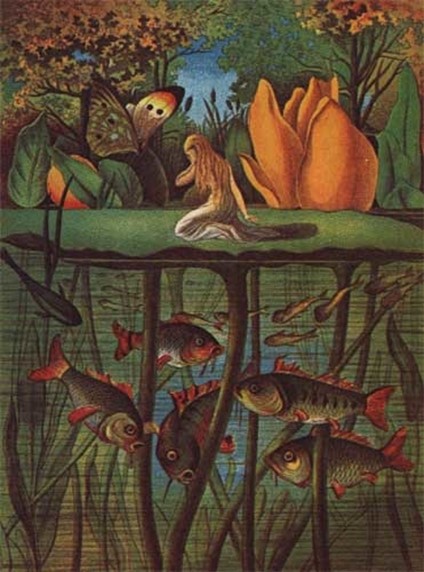
Then they took the pretty little bed and swam away with it. Left all alone on the green leaf, Thumbelina sat down and cried. She did not want to live in the slimy toad’s house, and she didn’t want to have the toad’s horrible son for her husband. The little fishes who swam in the water beneath her had seen the toad and heard what she had said” (Anderson and Hersholt).
A natural child response when said child (Tommelise) are forced to do a something that they do not want to do. In the case of Tommelise (verses the toads), she complains out of frustration when feeling helpless in this predicament. Her consent does not seem to matter not until she meets the King of the flower spirits:
The king was somewhat afraid of the swallow, which seemed a very giant of a bird to anyone as small as he. But when he saw Thumbelina he rejoiced, for she was the prettiest little girl he had ever laid eyes on. So he took off his golden crown and put it on her head. He asked if he might know her name, and he asked her to be his wife, which would make her queen over all the flowers. Here indeed was a different sort of husband from the toad’s son and the mole with his black velvet coat. So she said “Yes” to this charming king (Anderson and Hersholt).
Tommelise was given a choice to choose any flower and was asked to go with (not against) her nature for the first time.
However, the focus should be on Anderson himself when it comes to the original story. The story came out on the anniversary of his mother’s death a year later which brings significance to Tommelise spending the whole winter underground (Nunnally X-XI). Winter takes on the form of death, despair, and depression (Anderson’s mom died in the wintery month of December). In Tommelise, all the things she loves begin to go away:
Then came the winter, the long, cold winter. All the birds who had sung so sweetly for her flew away. The trees and the flowers withered. The big burdock leaf under which she had lived shriveled up until nothing was left of it but a dry, yellow stalk (Anderson and Hersholt).
Winter did not just take away her coping mechanisms, but it took away all the life that surrounded her -nature began to wither away-. This unpleasant experience resembles a form of depression, a dangerous deepening dark pit (a hole in the ground) that can lead to in a change in character. The mole in Tommelise literally lives in a hole and plays her polar opposite (He is all mister dark and gloom while she all sunshine and life):
Thumbelina did not like this suggestion. She would not even consider the neighbor, because he was a mole. He paid them a visit in his black velvet coat. The field mouse talked about how wealthy and wise he was, and how his home was more than twenty times larger than hers. But for all of his knowledge he cared nothing at all for the sun and the flowers. He had nothing good to say for them, and had never laid eyes on them (Anderson and Hersholt).
Not only was he the exact opposite of Tommelise and staying with him meant changing her character for good (restricting her personality to the point of not having one). He is the exact opposite of what she needs to be happy and thrive in this world. If Tommelise gives into the mole -in a sign of depression- then staying with him can be seen as a deadly trap where she would remain forever unhappy. Tommelise almost lets this happens to her, “The poor little girl felt very sad that she had to say good-by to the glorious sun, which the field mouse had at least let her look out at through the doorway” (Anderson and Hersholt). She almost gives up what she loves about the world. Her goodbyes are weighted in a depression that one cannot easily come back from (imagine giving up on the things that define you). Since Tommelise was experiencing the process of losing the sun, flowers, trees, and birds like her swallow a worsening depression began to happen inside of her because she experienced a whole year (not just the winter) underground. Anderson might have been experiencing a similar type of depression due to the loss of his mother. Mrs. Anderson died December 16th the year before Tommelise was published on the same date (Nunnally X-X1). Winter seemed to be just a bad time all around for Anderson, this kind of loss just does not go away.
In contrast to the winter, the summer before she ends up with the field mouse and mole, she is completely fine surviving the summer:
All summer long, poor Thumbelina lived all alone in the woods. She wove herself a hammock of grass, and hung it under a big burdock leaf to keep off the rain. She took honey from the flowers for food, and drank the dew which she found on the leaves every morning. In this way the summer and fall went by (Anderson and Hersholt).
Tommelise acts as a self-sufficient woman and basks in the sun’s glory having escaped an arranged marriage and verbal abuse of the may bugs. She doesn’t return home and she does not try to find the lily pad to rescue the white butterfly (to be fair she had no idea where she was since the whole incident with the may bug). Instead Tommelise makes a temporary bed for herself to survive in because she doesn’t want to get herself more lost due to forced circumstances of her traveling (the kidnapping toad and the flirtatious may bug). Anderson was known to be traveling to Paris, Switzerland, and Italy before his mother’s passing. So, when Thumbelina comes upon the baren field of grain that may be near her home, the question becomes did Anderson return to an empty house instead of a mother’s love? (To which we can only contemplate). Tommelise’s rejection of the mole as well as toad, may bug and anything that did not fit into her world of beauty can also be seen as unfair expectations:
She did not want to live in the slimy toad’s house, and she didn’t want to have the toad’s horrible son for her husband…Thumbelina did not like this suggestion. She would not even consider the neighbor, because he was a mole…But Thumbelina cried and declared that she would not have the tedious mole for a husband (Anderson and Hersholt).
Her expectation mostly had to do with the time period Anderson himself was living in. Around the 1800s the ideal woman around that time had to be proper, domestic and be content with in a marriage. Marriage usually represents some form of security as Mrs Fieldmouse points out: “If you could only get him for a husband you would be well taken care of, but he can’t see anything. You must tell him the very best stories you know” (Anderson and Hersholt). The attempt of making a home such as the mud home and a cozy hole in the ground (even a tiny walnut shell with flower petals to use as a bed) is seen as a negative. These homes are all meant to trap her in one place. The walnut allows Thumbelina to be trapped and stolen away from her home and mother. The mud room and the comfy hole in the ground were not seen as ideal but as imprisonment. Grief can imprison you and make you want to give up if you let it. However, with a little the help of others (such as the friendly fish and swallow) who are willing to listen you can make it to a better place. Whether it be an ideal home or not where you can start off new.
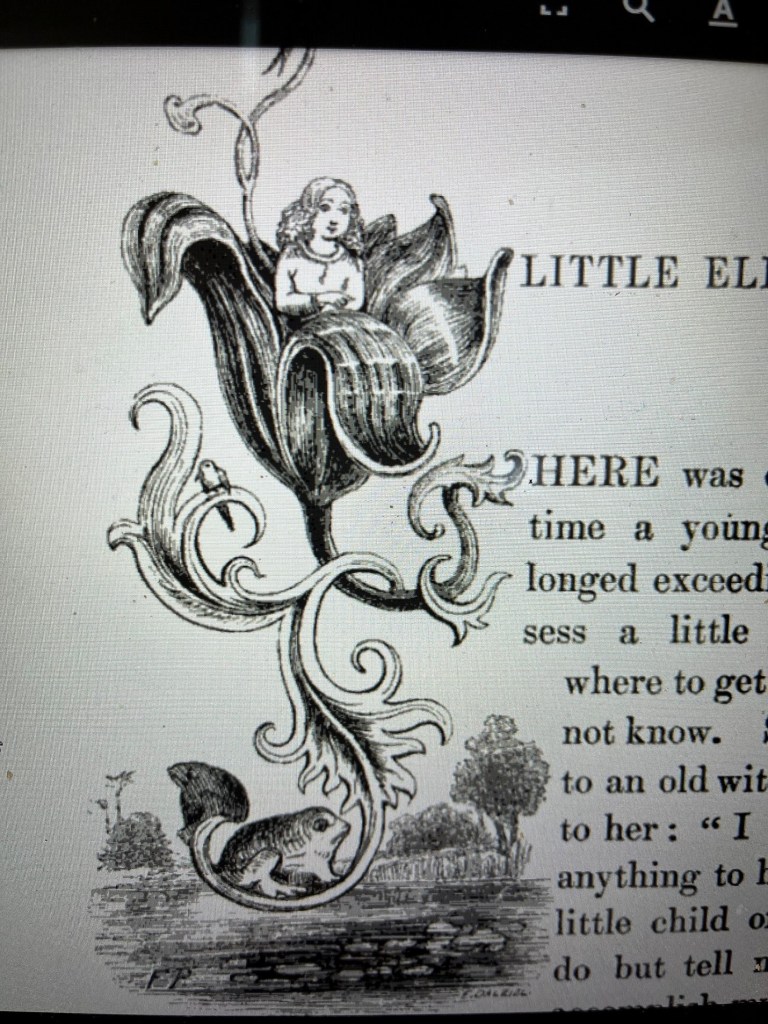
In the origin story, there is little room to dig into other things such as symbolism and the ideal women further due to the focus on (why Anderson wrote story the way he did) the battle with depression. Thankfully, there is another Danish/Swedish version in 1846 that is very similar to his that keeps to the two-year timeline of Thumbelina which is called “Little Ellie” (Boner 153) (Lamprecht 27). Though the story runs along same plot line, there are a few slight changes such as her name is no longer Tommelise but a Swedish name known as Ellie. Ellie very much like was born from a red and yellow tulip from a barley corn and flowerpot. She went through the same trials with the toad, and this time it was not a may bug but a cockchafer (which I would take for a cockroach). She continues down the same story line of running into Mrs. Field Mouse and the mole to stay with for the winter. She finds the swallow and nurses him back to health. The story follows to the same ending as Andersons. There are of course a couple of differences that appear in this version of the story because it is retold eleven years later. However, before the changes let’s talk similarities. The red and yellow tulip that Tommelise and Ellie are born from symbolizes true love in the red petals or in this case leaves and hopeless love in the yellow leaves. Both stories had this symbolism which foreshadows Ellie’s trials that she will be facing soon enough (must proceed with caution). One can also imagine the tulip being the ‘he loves me, he loves me not’ flower if the leaves/petals are alternating around Ellie. If this is the case than did anyone truly love Ellie? (Did anyone truly love Tommelise?) We end with both answers as we get to see the king of the flower sylphs/spirits marrying her and the swallow loving her enough to let her go. (Hopeless fairy love and the true of a swallow). If you truly love someone, set them free. Other forms of symbolism come with Mrs. Field Mouse who seems a bit old fashioned by domesticating Ellie/Tommelise into doing chores around the hole:
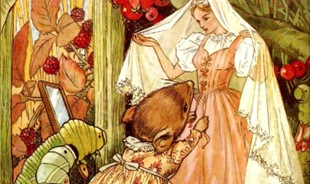
“If you care to, you may stay with me all winter, but you must keep my room tidy, and tell me stories, for I am very fond of them’… “You must work on your trousseau this summer,” the field mouse said, for their neighbor, that loathsome mole in his black velvet coat, had proposed to her. “You must have both woolens and linens, both bedding and wardrobe, when you become the mole’s wife.’ Thumbelina had to turn the spindle, and the field mouse hired four spiders to spin and weave for her day and night. The mole came to call every evening, and his favorite remark was that the sun, which now baked the earth as hard as a rock, would not be nearly so hot when summer was over” “Perhaps you would like to pass the winter in my house; but then you must keep my room clean, and tell me fairy tales; for that is what I like more than anything’… ‘You can employ the summer in getting your wedding-clothes ready, and what you will want in your housekeeping,’ said the mouse; for her neighbor, the tiresome mole had really proposed for Ellie. ‘I will give you all you want, so you may have a house full when you are a wife of a mole’ So Ellie was Obliged to spin at the bobbins, and the field-mouse hired for spiders that were forced to weave day and night (Anderson, Hersholt, and Boner 161,167).
Both stories have Mrs. Fieldmouse being very keen on the Thumbelina character to be forced into a domestication role. In the 1800s women were expected to act like in this way and if you didn’t settle down then there must have been something wrong with you. Addition to this sense of an ideal woman Ellie (Tommelise) seems powerless against male interference despite how she feels. She doesn’t fight against the toad. She doesn’t fight against the cockchafer (may bug). She doesn’t fight against the mole. Instead, she resigns herself to it because a proper lady does not reject the advances of a male suitor (Don Bluth and Lamprecht 37). Therefore, she could not do a thing to stop her troubles from happening and needed help to get out of them.
A major similarity is the two-year journey where it starts spring/summerish and ends up going through two sets of seasons. Where she ends up migrating with the swallow to a place where sylphs or flower spirits live in their flowers (an eternal spring). Two years to unpack. The beginning of the story where Ellie/Tommelise are playing in a plate of water:
by day she played on table. Here a plate full of water was placed, surrounded by the garland of flowers that dipped their stems in the water: in the middle, a larg tulip-leaf was swimming, and on this was Ellie to sit, and to sail from one side of the plate to the other; and two white horse-hairs served as oars (Boner 155).
The scene represents of form of stasis for no matter what she cannot float past the flower wreath that surrounds the plate. It isn’t until she is removed from her home that she really gets moving and becomes a traveler in a continuous motion. It didn’t matter that the toads tried to trap her into marriage or that the cockcharfer/may bug tried to take her for his own. She didn’t stay long enough. She ended up spending the summer alone taking care of herself all the way to beginning of winter. It is only when winter happens that she started to actually start running into trouble because she was trapped by natural forces. Thereby allowing for a form of courtship to happen from the mole such as the tunnel that she and Mrs. Fieldmouse were allowed to use after the mole fell in love with her voice. The biggest difference between these Tommelise and Little Ellie. Anderson’s tunnel, the mole makes the tunnel after meeting Tommelise to court her, but in Little Ellie he offers the tunnel up to them (it already exists). Underground with Mrs. Fieldmouse and the Mole that the Thumbelina character becomes restless missing the outside world as winter became spring. Her swallow friend said his goodbyes leaving her behind because she didn’t want to up and leave. However, she never left when it became spring (she didn’t even try to leave). Spring quickly became summer as she was on her way to marry the mole, which she was not happy about. By the time that autumn rolled in, she was not having it. Mrs. Fieldmouse scolded her for complaining and told her how lucky she was (more like cursed). Then four weeks later they were closer to Winter. She was saying her goodbyes to the outside world (giving into the curse). Luckily, her sparrow friend she had nursed back to health the previous winter was to the rescue and took her far away (breaking the curse of darkness). She finally settled down and got married to a sylph king. It took her two years to figure out what she wanted and settle down when it comes to marrying someone.
The ending can be seen as a biblical or form of Greek symbolism as well. That is if Tommelise/Ellie froze to death before she got to Mrs. Field Mouse’s home. The hole in the ground homes transform into the underworld with the mole is the ruler whether he be Satin or Hades (Ness). In contrast to the underworld, we get the heavenly trees and marble palace with flowers that are home to angelic like creatures with wings (Anderson, Hersholt, and Boner 171-172). The representation of heaven and hell appears, but where does Greek part come in besides the mention of Hades that Ness had recently pointed out? According to myth Persephone being the goddess of spring was taken down into the underworld to be with Hades (away from the sun and everything she loves like the sunshine). Sound familiar, it should because that is what happens to Thumbelina. Yet, that is if the case with Thumbelina and she goes to the underworld after dying from a “freeze to death” situation as Anderson suggests in his original version. Another theory involves a different kind of cycle other than life and death. She was born from a flower and therefore ends back in the flower. However, the ending is not the only time she ends up a flower. The maybug/cockchafer puts her on a white daisy, which signifies the end of her first two trials. Any coming-of-age trials usually come in sets of three. In the case of Tommelise/Ellie had only experienced the first two (they were very short trials). Therefore, it left no room for Thumbelina to really thing about what she really wants out of life (the story would be too short otherwise). If the story would have ended there, then Tommelise/Ellie wouldn’t know her place among the fairy like creatures in the end.
It is within these three trials we begin to see differences like escaping the toads, the sash becomes a “girdle” (Anderson, Hersholt, and Boner 158). The may bug becomes the cockchafer, and the words they say alter somewhat but convey the same message. A clear contrast is with Mrs. Field Mouse who says “Fiddlesticks” in Anderson’s English translation and “Fiddle de dee” in this version with Ellie (Anderson, Hersholt, and Boner 168). However, because time is not spent long enough with the first two trials the changes were more subtle compared to the change with the tunnel in the winter scene. The timing of how she figures out that the swallow isn’t dead changes:
But Ellie could not sleep. She got up, platted a mat of hay, carried it to where the dead bird was, and covered him up on every side, that he might rest more warmly than on the cold earth…Then she laid her little head on the bosom of the bird, but she was sadly frightened; for it seemed to her as if something moved within (Boner 164).
Tommelise figures this out a lot sooner than Ellie where the mole also had dug the tunnel to court her; she figures out that the swallow his alive by hearing a soft heartbeat to return that night. Ellie on the other hand was given the tunnel that was already made. When she returns to the dead swallow that night, she warms his body up (a funeral sendoff ritual). That being said there really isn’t much difference after that because a flower sylph and a spirit of the flower are still considered to some form of fairy creature. The same can be said for the may bug and cockchafer are a form of some flying bug that is meant to gross the audience out. Though the swallow’s false death is meant to be playful (yay, the bird is not really dead!) and the stories end with a happy note.
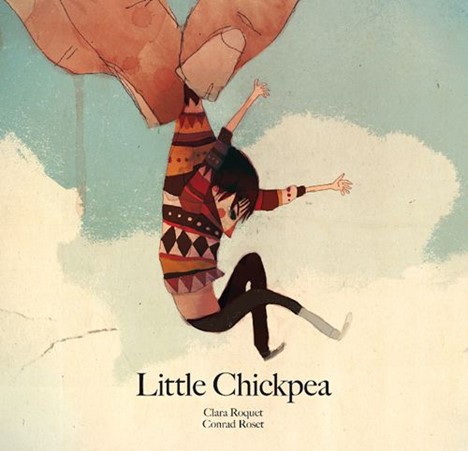
Italy’s story does not end with a happy note. It is also very much different from the main Thumbelina story but sticks to the Thumbling lore of a typical male role. The story is called “Little Chick-pea” and appears in the year 1885 (Sur La Lune)(Lamprecht 28). It follows a boy born out of chick-pea that his mother traded in exchange for two loafs of bread, so a woman could feed her family. His mother got a bag of chickpeas to plant in the ground and next morning she had hundreds of sons (too many sons). They were instantly killed by the woman’s husband, a carpenter who was verbally abusive with her about having kids to begin with. That’s how this whole mess started. Cecino being the lone survivor went to help his dad at his shop. His father then took him around the village while being inside his pocket. Though his dad was perceived to be crazy for it appeared that he was talking to himself, but when he proves that he wasn’t (mad as a hatter) Cecino quickly became hot in demand.
His father rejected the offer the first time. After the two thieves try to steal the ox, Cecino warns his dad, and this follows to the thieves wanting to buy him. His father caves after some persuasion for two bags of gold. Then shortly after they steal two horses and have Cecino go feed them oats, but he falls asleep to be eaten by a horse. The thieves come looking for him and he tricks them into killing the horses. The two thieves ditch the horses near a famished wolf. The wolf eats the horses and Cecino before wanting some goat meat as well. Cecino warns the goats, and the wolf thinks that he ate some wind and bashes against a rock. This frees Cecino who quickly hides under some rocks. Then three robbers appear with the leader needing to count some gold in a bag. Cecino tricks the leader to killing his two friends and then spooks him into fleeing leaving the bag of gold behind. Cecino retrieves the bag of gold and heads home. However, Cecino does not make it all the way, for his mother goes out to meet him after hearing him. She takes the bag of gold returning home without Cecino. She returns for him, but he is not there and so she with her husband goes looking for him to find him drowned in the puddle. (There is plenty of death in this story).
The cycle of life of death appears strongly in the Italian version. The focus is turned towards the aspects of what comes from the earth returns to the earth, in addition to the violent food chain of animals eating each other. Yet this story is also powered by greed with a heavy sense of materialism being the driving force of this story. Why plant all of the chickpeas? Why are there so many deaths? Why put a price on someone’s life? All of this can relate back to the sin of greed and how greed has consequences. In the Anderson story and the Ellie version, Thumbelina’s barley corn was traded for “12 pennies” and “some silver”. In the Italian story we get “two loafs of bread” for a whole bag of chickpeas and then Cecino gets sold for “two bags of gold” which leads to another bag of gold that was chosen over him -results in Cecino drowning in a puddle (Anderson, Hersholt, Boner 154, and Sur La Lune). The total value of Cecino’s life is two loafs of bread and three bags of gold plus one hundred and four lives. Which compliments the theme of him being more of an object than any other of the Thumbelina previously mentioned. Cecino existed as an object. His birth was traded for two loafs of bread. His life was traded for all of his sibling’s death while he hid. His father’s clients wanted to buy him. Two thieves bought him for two bags of gold. His freedom cost two lives of horses and his love cost him two more deaths and another bag of gold. The cycle of Cecino life ends when his mother took the bag of gold home and not him:
“When his mother heard him, she went to meet him and took the money and said: “Take care you don’t drown yourself in these puddles of rain-water.” The mother went home, and turned back to look for Cecino, but he was not to be seen. She told her husband what Cecino had done, and they went and searched everywhere for him, and at last found him drowned in a puddle” (Sur La Lune).
The idea of him being an object born out of greed and his survival is determined by other actions shows that he cannot live independently, for his usefulness had only benefited others than himself. Thumbelina also was beneficial to others but not herself. In the Italian version the mother is bitter because her husband is verbally abusive to her about not being able to have kids, “he did nothing but scold his wife because she had no children” (Sur La Lune). In a form of bitterness and retaliation towards her husband she strikes a deal with a begging woman who offers her way to have his for two loafs of bread. She then plants all of the chickpeas the poor women given her just to shut him up so she would have some peace of mind (this was a poor decision on her part). It drove him crazy enough to kill everyone, but Cecino who hid from his father. Then his so-called mother sent him to go help his dad in his shop, which after what just happened would be highly questionable (but okay let’s send him off to the man that killed his siblings). His father known killer of his siblings eventually trades him away to be with two thieves that have him be like their little mascot (Cecino officially loses his son status). He ends up doing the chores for the thieves too when they claim to be too tired to accomplish the tasks. This also relates to Mrs. Fieldmouse and Tommelise’s deal for her to during the winter for cleaning and entertainment. The materialism is weighed more heavily in the “The Little Chickpea” due to the number of deaths that has happened over what appears to be two days of time.
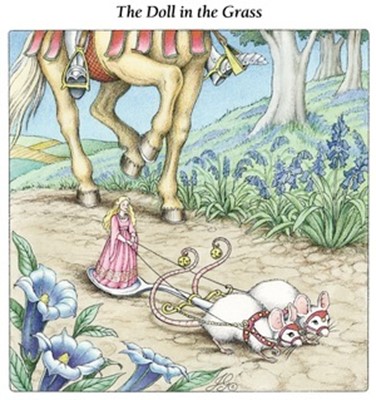
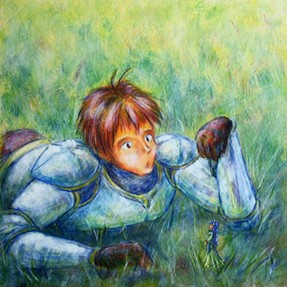
Materialism and greed do not stop with Little Chickpea, but it continues in the Norway’s story “The Doll in the Grass” that was also created in the romantic era of the 1800s (Gosagacious and Hughes) (Lamprecht 29). The title hints to the materialism that is being placed on the Thumbelina character that lives in nature by associating her with a doll. The fairy tale begins with royalty with a king and his twelve sons. Once the twelve sons were of age, the king sets his sons on a task to bring back a potential wife. However, to get the King’s approval the potential wife must weave a shirt in a day. Of course, he would set his sons up with new gear and horses for this quest to be ‘the knight in shining armor’. Not all of sons got along. The youngest son called Askeladden (sometimes known as Boots) was immediately rejected by his older brothers after departing the kingdom. Askeladden was left to despair without going very far as his brother went on ahead without him. When the doll in the grass appeared before him. (Though this part is a bit confusing). She could be seen at tiny human who initially greets him or as another tiny human entirely that he meets after bending down to get a good look at her. The doll herself was very beautiful and listened to his woes before agreeing to marry him. The doll in the grass quickly whipped him up a tiny shirt that he would bring to his father. Surprisingly his father approved of the tiny shirt. In relief he went to find his soon to be doll wife. He finds her, but she is to be considered an independent tiny doll queen who rides on a silver spoon being pulled by two white mice. She stays like this until Askeladden’s horse gets spooked. The doll queen’s spoon flips and launches her into the water. A merman carries out and she is fully grown into a beautiful woman. Then she rides on his horse back to the castle with him to where they are married and live happily after. His brothers and their ugly wives on the other hand were rejected and forced out due to their jealousy of how beautiful the doll in the grass was.
Materialism and the ideal woman do go hand in hand in the doll in the grass story, but the enchantment of nature becomes more of a president theme in this story. The doll in the grass lived in nature living amongst the grass (where tiny humans live). There were even mice who pulled silver spoons that she rode on. Not to mention another mythological being, a merman, who was not too far off in the waters and was able to rescue her when she fell in. However, it is this fall that causes the doll in the grass to lose her independence as she becomes too big to ride her silver spoon being pulled by two white mice:
upsetting the spoon so that the Doll in the Grass fell into the water. Askeladden was so upset that he did not know how he would bring her up again. But after some time a merman came up with her; and now she had grown as big as any other adult human, and much lovelier than she was before (Gosagacious and Hughes).
The water caused her to grow into normal size due to the enchantments of nature being removed. She joins Askeladden on his horse and they ride to the castle. This illustrates her loss of power when it comes to strength and pride. One could also see the water as a form of baptism that converts her over to the human world. Since the water officially removes her from the natural world. She still has to marry Askeladden despite this (unfortunate) change that has come over her. She was removed from the nature and so the nature was removed from her. In the Romantic Era, imagination and connections to nature were heavenly influenced in fairy tales. For instance, the doll had been in the grass and submerged in water. She becomes connected to the nature in the setting of this story. Additionally, the doll is a well-grounded individual until unforeseen circumstances removed her from the earth. Once submerged in the water -the earth can be considered washed away from her- the doll becomes cleansed. The separation of nature disenchants the doll into a proper wife (the ideal woman). The proper wife has to care what they look like – how they act – and be skilled at doing domestic tasks such as weaving a shirt in a day (old fashion trademarks of women behavior). It objectifies women by putting the doll or any Thumbelina character among everyday objects. For example, Tommelise and Ellie’s play time was on a plate. Cecino though male was sold like an object. The doll in the grass rides on a “silver spoon” (Gosagacious and Hughes). Additionally, this was the time period where the everyday women were meant to act like the ideal woman and find husbands to live a proper life. And if someone wanted their hand in marriage, they had to accept the proposal to keep face. Nature pushes against this idea of the ideal woman because the doll in the grass exists in the outside world. In the outside world, nature is naturally beautiful unique and an unpredictable force. Nature in the sense of “The Doll in the Grass” story proves to be a symbol of freedom as the doll is leaving the outside world when she gets tossed into the water – losing her freedom – due to unknown mysterious circumstances that spooks Askeladden’s horse.
Another look at the nature lens is that the doll along with the other Thumbelina characters are given domestic tasks. These domestic tasks are supposed to be natural for women as an everyday skill. Women are assumed to know how dress themselves, clean, entertain, and make clothes. In the original story Tommelise and in the other Danish version, Tommelise is forced to spend her spring and summer -making her wedding clothes- before she is to be married to the mole. The doll in the grass has to weave a shirt in the day. In Tommelise and Little Ellie having children was stressed as a theme. First Tommelise and Ellie begin having trouble by being arranged to be married by -going into a mud home- with a toad and -into a hole- with the mole alone. (Vaguely described as private chambers). This is to be assumed that they are going to consummate the marriage through a form mating. However, if we look at the Thumbelina mother and add the Little Chickpea’s mother into the mix then we get women who are not complete without children in their lives to the point of verbal abuse from the husband. Which could probably explain why in the first two stories with Tommelise and Ellie, there was no father figure. In contrast to these stories the doll in the grass does not have a mother. She does get married like Thumbelina into royalty. Marriage among royals usually is means to do one of two things. The first is to unite a kingdom and the second is to conceive an heir. Which one can see by the King’s condition for his sons to marry. The condition involves an impossible task of finding a good wife to weave a shirt in a day. Now why would a wife need to weave a shirt in a day and why was the tiny shirt acceptable? The answer is clothes for their future children that will grow be constantly growing out of their clothes. The tiny shirt becomes a symbol of baby clothes.
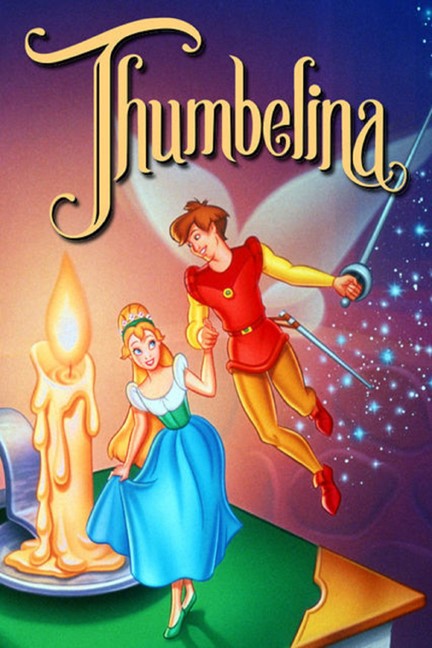
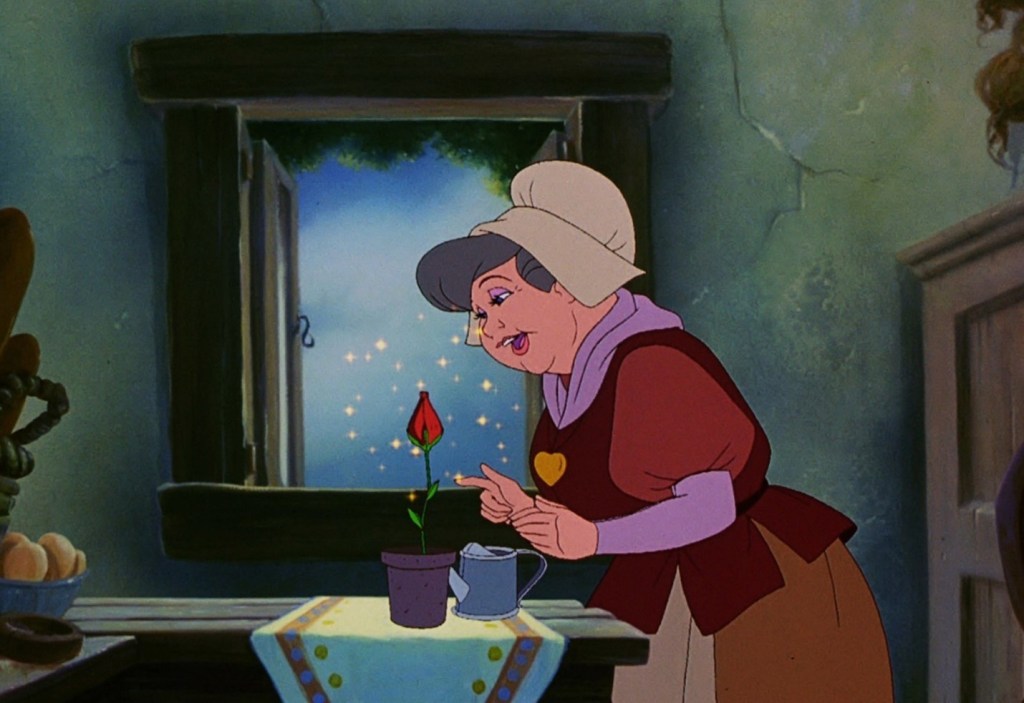
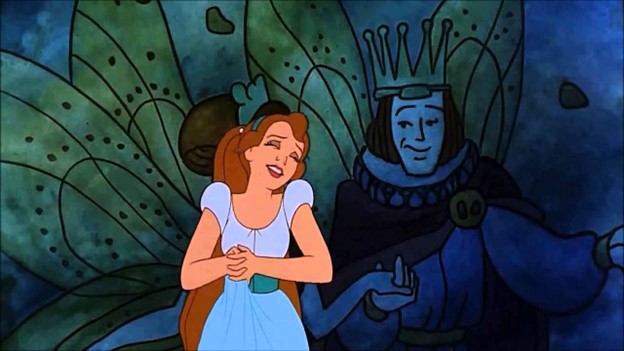
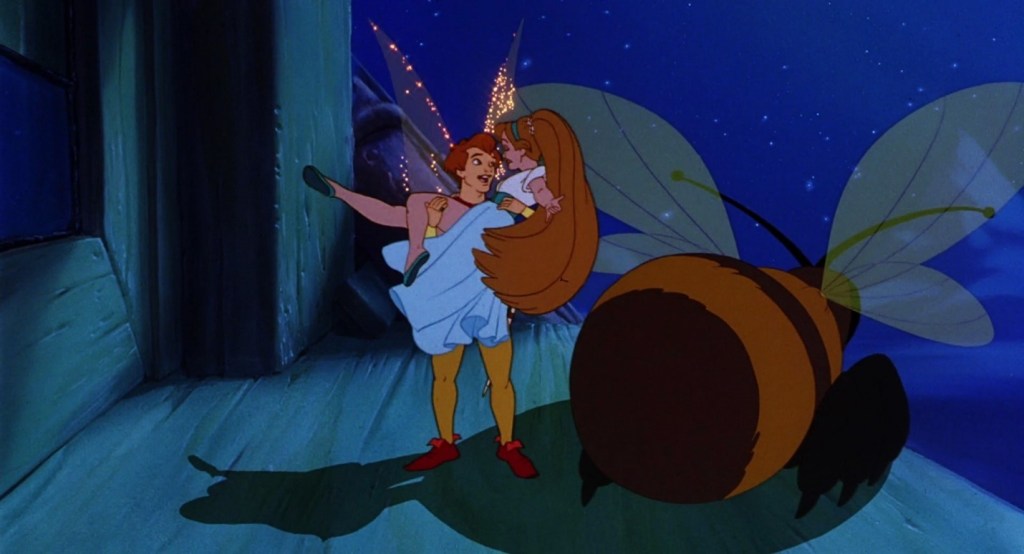
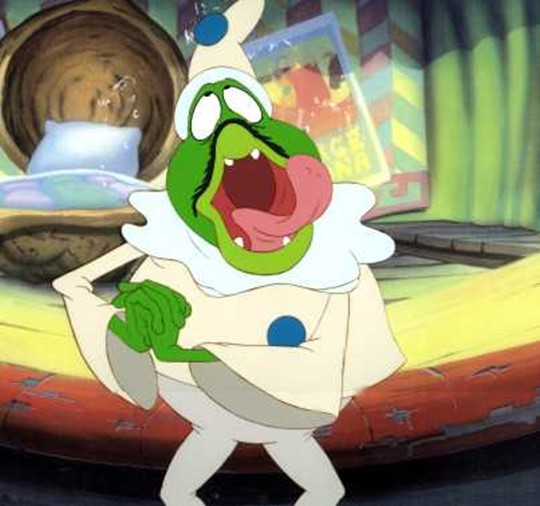
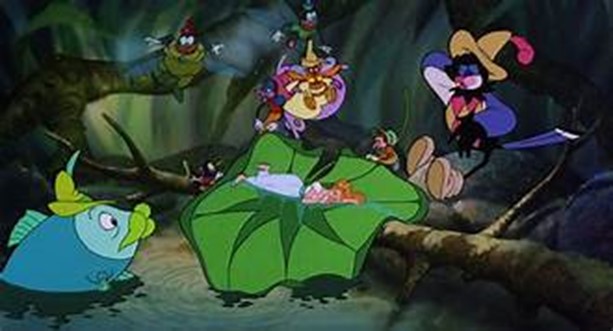
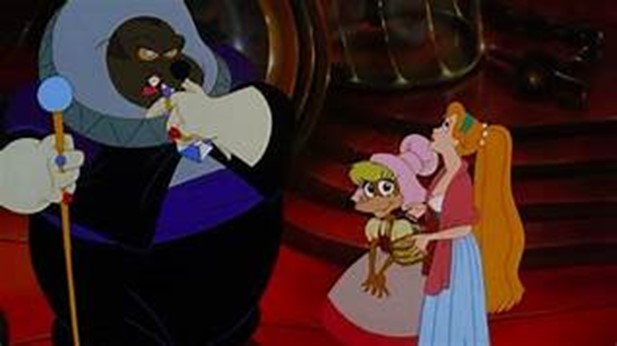
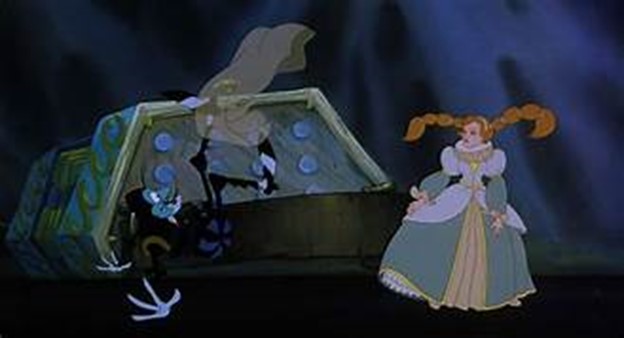
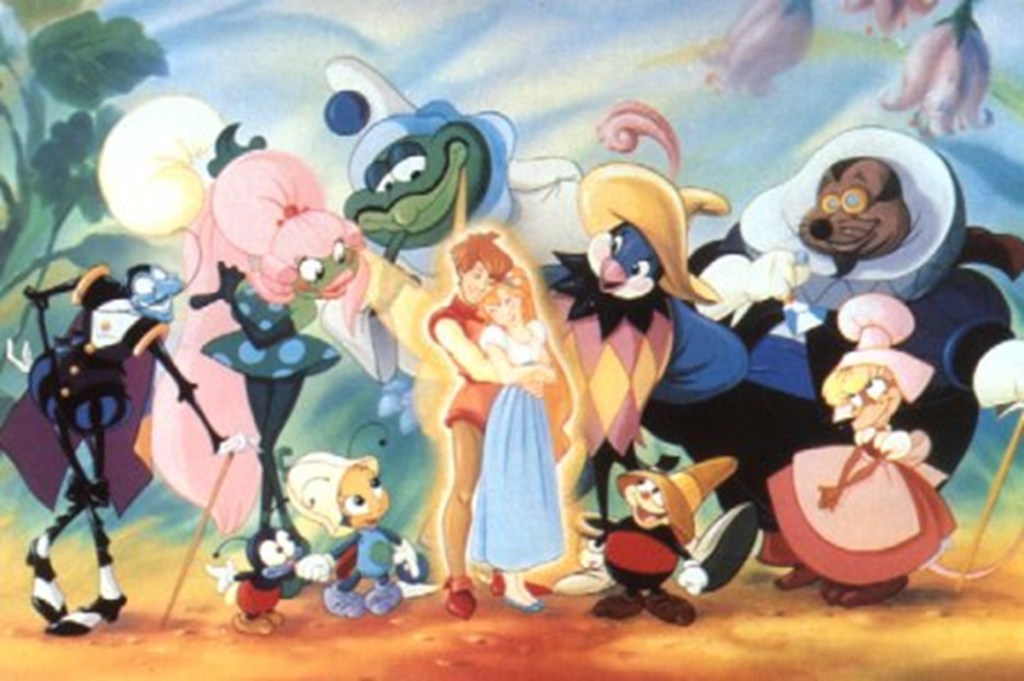
Impossible tasks such as weaving a tiny shirt inspires a fifth media to be discussed which brings us out of the 1800s and into the year 1994. Don Bluth’s movie “Thumbelina” is filled with music and similar plot line to Tommelise and Little Ellie, but there are some huge differences along with additional challenges that combine the old with the new (Lamprecht 30). The story starts out with the song “Impossible things” sung by the swallow Jacquimo, who is hopeless romantic and very optimistic bird with -a collection of romance novels- in the ceiling somewhere in Paris. He is the storyteller of Thumbelina. The audience gets shown the first few pages with the barley corn and flowerpot that turns into a red flower (what I assume to be the tulip) where Thumbelina is born (Don Bluth and Lamprecht 31). She does not play in plate of flowers and water. Instead, she helps with chores and ends up in some sticky situations due to her size. Thumbelina’s struggles are reflected when her mother is reading her a bedtime story about the noble dog -she gets flustered and asks- are there any stories about little people. Her mother shows her pictures of fairies, where she has now become enchanted by the ideas of royalty and wings (Don Bluth and Lamprecht 31). Then that night she meets Prince Cornelius who hears her singing. He takes her out on a date. Once the date is over, he promises to come back for her in the morning, so she can meet his parents and propose to her. However, the toads had her singing while she was on the date and the momma toad kidnaps her in the middle of the night. Where she is forced to sing and be engaged to the Grundel who is not the sharpest tool in the shed (Lamprecht 32). This her engagement happens after being told by the momma toad, that she should focus on earing a living through her voice to avoid ending up domestic situation. Thumbelina voices against the toads and fights them every step of the way and asks, “Is there anyone who cares what I think?” and Jacquimo appears before the two fish and helps her with the lily-pad, but she is soon thrown into another troubling situation. She approaches (her version of) a waterfall. Then the fish appear along with the jitterbugs to help her to the shore. Where she plans on going home and Jacquimo helps by singing an optimistic song about impossible things when you follow your heart. She tries to find her way home along with the company of some jitterbugs. Until the beetle shows up scaring the jitterbugs off and becomes very invasive with her.
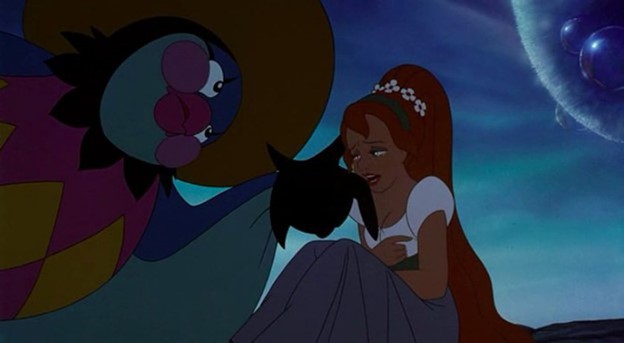
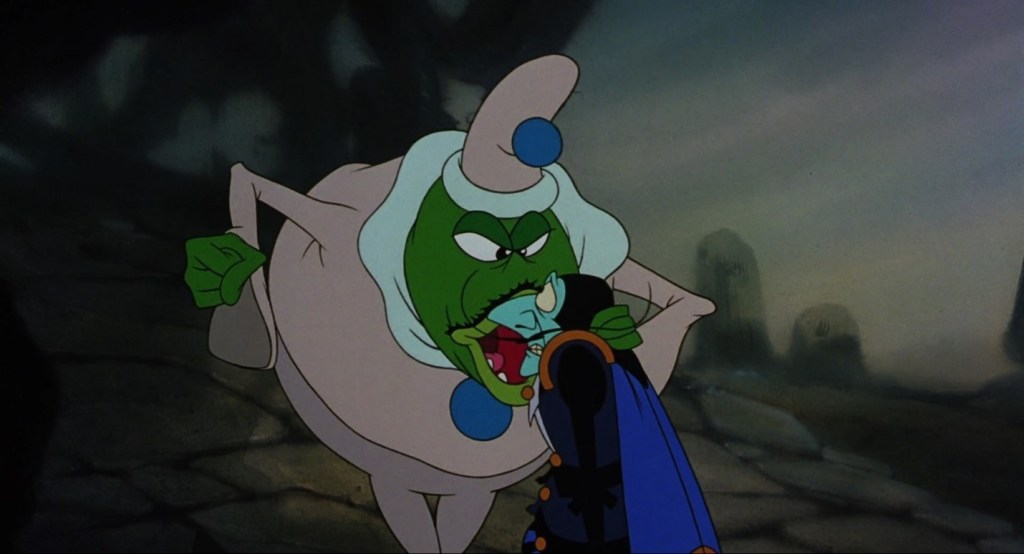
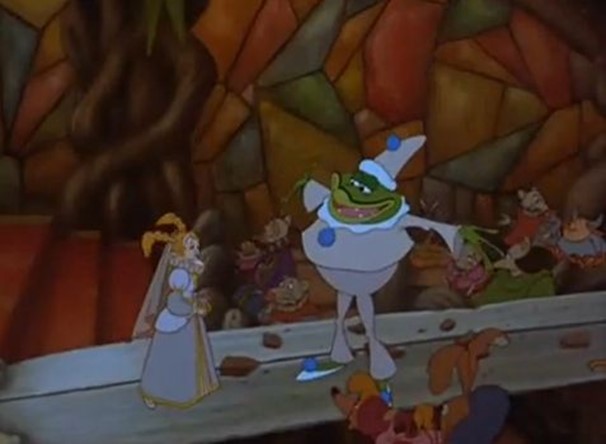
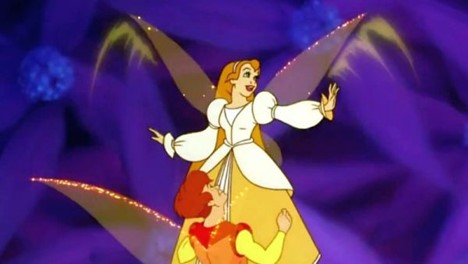
Thumbelina asks him for a favor to fly her up to the tree so she could have a better look to find her way home. However, he changes the plan ever so slightly by taking her to beetle ball. He dresses her up like a beetle, where she is praised until her costume falls apart. This causes verbal abuse to happen as everyone starts to call her ugly including the beetle who had once called her beautiful (he was peer pressured). Ashamed and depressed, Thumbelina weeps and Jacquimo finds her and begins cheering her up. He promises her that he will find the prince for her so she can have her happily ever after. However, Thumbelina gets lost. Winter comes faster (since this is a movie) and she ends up underground with Mrs. Fieldmouse after waking up in her home. Mrs. Fieldmouse just happened to find her in an old shoe nearby. Soon after she wakes up and hears news about the prince’s death. Mrs. Fieldmouse -insensitively- introduces her to the mole and has her sing a happy sad story for him. She sings about the sun and winter showing her depression from the news of she the prince found dead and frozen solid. In return for the song, the mole shows them a unique find in one of his tunnels. Which is an injured and dead Jacquimo. Thumbelina in shock weeps for her dead friend. She soon realizes he is not dead and plots to nurses him back to health. While Mrs. Fieldmouse and the mole conspire to get her to marry him so she can keep him company in his hole. Thumbelina rejects the idea after learning what the Mrs. Fieldmouse and the mole have planned for her. Mrs. Fieldmouse tells her to do it for security (money). By marrying the mole meant she would be provided for with money and riches. Which she then tells a recovering Jacquimo, who tells her that’s silly and she should marry the prince. (But he doesn’t know that prince is assumed to be dead). He asks her to come with him, but she is feeling helpless and decides to go along with marrying the mole. However, at the wedding ceremony she rejects the mole because she still loves Cornelius (and she doesn’t love the mole). The toad appears along with the beetle. She tells the toad off and stomps on the beetle’s foot rejecting both of them. Then she escapes while chaos is happening behind her. Thumbelina sees the light coming out of a tunnel and she escapes finding Jacquimo whose is singing happily. He takes her to the vale of the fairies and encourages her to sing. She sings and the ice starts to melt despite her doubts -she contemplates out loud almost giving up-, but Cornelius shows up. He proposes. They kiss, which gives her wings (Don Bluth and Lamprecht 37). Then she gets married with her mother being able to attend the wedding and she lives happily ever after. Then we are back in Jacquimo’s attic as the tiny book closes.
Now Don Bluth’s movie pushes against Anderson’s version of Thumbelina because Thumbelina has a voice of her own. Thumbelina is curious about the world, love, and is set on marrying for love (even though she doesn’t know what love is at first). She is shown by the prince what love at least looks like. Her sings offering to be her wings with hints of hope that she may have her own one day (Don Bluth and Lamprecht 32). Thumbelina also voices to against the idea of arranging marriage to the toad publicly and wants people to care about what she thinks. She uses the beetle’s infatuation for her to her advantage, but it backfires because she doesn’t have wings (Don Bluth and Lamprecht 34). She leaves the mole at the alter rejecting him saying never. This empowers her. She rejects both the toad telling him no and telling the Beetle that she is not his to claim -on her way out- (Don Bluth and Lamprecht 36). She even argues with Jacquimo because his optimism can be seen a form of torture. This would not slide in the 1800s. However, since the movie was made after the 1970s, this empowerment for Thumbelina became acceptable. The 1970s were the start of fairy tales becoming more and more liberating for women over time, which is what led the world to the Don Bluth movie (Haase). In addition to this freedom that women were getting in their starring roles, Thumbelina could have easily flown back home on Jacquimo’s back and not go on this crazy adventure. However, if she did go home then the most important messages would be lost in this version of Thumbelina. These messages encourage people to try and not give up. Jacquimo does not provide her with a quick fix. Instead, he encourages her that she can find her way home on her own (Don Bluth and Lamprecht 33).
Though when does anything go according to plan. Thumbelina (of course) runs into plenty of troubles. So does Jacquimo. In his search for the vale of the fairies and his optimism being his driving force to help her out he flies finding predators -to ask if they know anything- including a fox and a hibernating bear. He even gets caught in the winter winds causing him to crash into a thorn bush -getting a thorn stuck in his wing- which impairs his flying ability. This event eventually causes him to end up in the moles hole (Don Bluth). However, even though nothing goes according to plan he believes anything is possible if you keep trying. His belief enforces the original message of Thumbelina trying to find her way home. Additional differences are with Grundel and the Beetle who go after her after Thumbelina leaves them making her an object of desire to be chased after, but they were more for comic relief like Horris and Jasper in 101 Dalmatians (just two goons that one would find appalling). Thumbelina still gets married to a guy she just met. Her love to be considered as true love since the tulip was only red petals (Don Bluth and Lamprecht 31). She chose Cornelius compared to Tommelise and Ellie who was just kind of made queen and proposed to with a crown. Not to mention Thumbelina got to keep her name. Tommelise and Ellie got their names were changed because their names were found to be ugly. Cornelius loved everything about Thumbelina including her name.
Lastly, Thumbelina was nowhere near being the domestic type. Thumbelina struggled with domestic tasks like getting trapped in a pie, helping with the chores, and doing as she is told. She doesn’t just accept her circumstances. She does not go for help. In the case of the toads, she is told about the domestics of women hood by momma toad:
The scrubbings and the washings
And the noses with the drippings
And the soapas always boiling…
Mozo, Gringo, Grundel Si, Si
The panes and windows falling
With the diaper changing
With the roof she’s leaking
And the enchiladas spoiling…
Do you know how to do these things
Like you will have to do these things
Or does the very thought of it make you wince (Don Bluth)
Thumbelina winces to this, but she still wants to marry the prince and not Grundel (Don Bluth and Lamprecht 32). Additionally, she is considered to be stuck one place and help finds her and she says the first thing she needs to do is to get off the lily pad (not go for a wild ride on said lily pad) (Don Bluth and Lamprecht 33). Then when it becomes winter, help finds her again and brings her in. She takes refuge in an old shoe, near the home of Mrs. Fieldmouse who brings her in while she sleeps (deadly sleep?). In addition to this Thumbelina never asks Jacquimo to fly her home. Not until the very end where he takes her to the vale of fairies. Thumbelina also doesn’t want to entertain people, she is forced to sing and perform before the toad, beetle, and mole despite her objections. Her thoughts along with her feelings are not taken into consideration at all. This happens especially when it comes to her being underground with the mole. The mole appears in three of the five stories we have discussed and can represent as death. He even decorates his home with dead bugs (or as the Beetle puts it he stuffs them and pins them on his wall) (Don Bluth and Lamprecht 35). That would mean that Thumbelina either has died or is in the process of dying. In another sense of this scene – she defies death. Another empowerment for women, they can defy death (do not give up on life).
Another game changer is that Don Bluth’s movie is the only story that Thumbelina expresses interest in love and being the only one her size. It is also the only story that hints to her age of being a teenager when she is born based on Cornelius’ age of sixteen-years-old revealed by his father when talking to his mother -during the goldening of the leaves-. Cornelius also is not the standard love trope guy, who acts like a gentleman or the knight in shining armor. Compared to the other stories of being a person of high prestige and loves her only for her beauty. He is an adventurous teenage boy, who flies around on his bumble Buzzbee and does indeed go to save her, but he is has his flaws (Don Bluth and Lamprecht 32). Cornelius is clumsy, vulnerable to the winter, and is stopped by freezing in a puddle. While Thumbelina gets herself into more trouble. He does get her in the end, but he does not save her. Cornelis just gets to appear as another playful joke about defying death (men can defy too).
The Thumbelina story explores the themes of depression, death, love, marriage, ideal women, nature, materialism, ideal men, and the changing of seasons. Though most of these stories happened in the 1800s and only one in the 1900s – these stories still have evolved over time and still hold significance value today – when it comes to the female perspective about love. Love takes on so many forms and has evolved over time just as the story of Thumbelina have done. How would the Thumbelina story be written today in the year 2022? Love takes place in many peoples’ hearts both in the romantic and nonromantic sense as we have seen in other fairy tales that are just starting to come out; or have come out in the past that have just been overlooked. One of my favorites that fits into the theme of Thumbelina is the movie Epic that is about this connection of nature, love, reconnecting with family and oneself to nature. Epic is a seriously underrated movie despite how good it was. It showed how love knows no bounds. Its one of the few movies where an African American woman plays queen of the forest and is in love with a white leaf-man, who anything would do to keep her safe. She has this beautiful powerful role that is all about love and connection to the earth. The theme of love is one that transcends time and is one that constantly evolves with each new experience. We keep falling in love with things – we personally find beautiful. Love is a natural thing to want, and it is one thing we cannot live without. But with love there comes hate and fear. Hate because we run into things that go against our personal nature. In Thumbelina this happens with the Mole, he is not what she loves and plays the opposite to what she needs to thrive (Don Bluth and Lamprecht 35). What she loves is what she needs is love and love is what allows us to thrive. We all faced fear when it comes to love. We begin to feel self-doubts and question our judgements on the person we picked. However, we evolve with love too. Jacquimo’s song says, “You’re sure to do impossible things If you follow your heart Your dreams will fly on magical wings” (Don Bluth). Our heart in a metaphysical sense is one of most powerful gifts of intuition. It is our hearts that guides us. They tell us when something is real compared to what isn’t. That is why the hope of true love exists. That is why we know it exists. And it is why we get scared. And why we know, what we do not like. Today’s Thumbelina should reflect on our version of love today. Whether it be love to nature or love we share with one another. Love has and will continue to evolve, which is why you should “Just trust the swallow And always follow your heart” (Don Bluth).
Pictures


Works Cited
“A Danish Story-Book … Translated by Charles Boner. With Numerous Illustrations by the Count Pocci – Google Play.” Google Play, play.google.com/books/reader?id=IgVmAAAAcAAJ&pg=GBS.PP164&hl=en. Accessed 25 Feb. 2022.
Don Bluth. “Thumbelina Full Movie 1994 HD.” YouTube, uploaded by Watch Movies, 29 Dec. 2017, http://www.youtube.com/watch?v=J10SnPvktKc.
Gosagacious. “Doll in the Grass: Analysis.” Awesome Things, 8 Dec. 2015, gosagacious.tumblr.com/post/134798603954/doll-in-the-grass-analysis.
Hallett, Martin, and Barbara Karasek. “Feminist Fairy-Tale Scholarship.” Folk and Fairy Tales – Fifth Edition, edited by Donald Haase, 5th ed., Canada, Broadview Press, 2018, pp. 394–400.
“Hans Christian Andersen : Thumbelina.” Copyright 2022 The Hans Christian Andersen Center, andersen.sdu.dk/vaerk/hersholt/Thumbelina_e.html. Accessed 25 Feb. 2022.
Hughes, Simon Roy. “The Doll in the Grass.” Norwegian Folktales, 25 Feb. 2022, norwegianfolktales.blogspot.com/2016/09/the-doll-in-grass.html.
“The Many Names of Thumbelina.” Writing in Margins, writinginmargins.weebly.com/home/the-many-names-of-thumbelina. Accessed 25 Feb. 2022.
Ness, Mari. “A Tale of Tiny Artistry: Thumbelina.” Tor.Com, 17 Jan. 2018, http://www.tor.com/2018/01/18/a-tale-of-tiny-artistry-thumbelina.
Nunnally, Tiina. “Chronology and Introcuction.” Hans Christian Anderson Fairy Tales, edited by Jackie Wullschlager, Deluxe, New York, The Penguin Group, 2004, p. X–XXXIII.
“Sur La Lune || Thumbelina Annotated Tale.” Sur La Lune, http://www.surlalunefairytales.com/s-z/thumbelina/stories/littlechickpea.html. Accessed 25 Feb. 2022.
“Thumbelina: The Influence of Literary Movements, by Sydney Austin.” Ole Miss Fairy Tales 2015, olemissfairytales2015.weebly.com/thumbelina-the-influence-of-literary-movements-by-sydney-austin.html. Accessed 25 Feb. 2022.
 Craft Legacy